

Alejandro Alva, MD, offers insights on the use of prescription digital therapeutics for substance use disorders at the Southern Florida Psychiatry Conference.
Alejandro Alva, MD, offers insights on the use of prescription digital therapeutics for substance use disorders at the Southern Florida Psychiatry Conference.

Conferences: the perfect networking opportunity.

Long-acting injectables enhance stability and adherence in patients with psychosis, improving long-term outcomes and quality of life, shares Erin Crown, MHS, PA-C, Psych-CAQ.
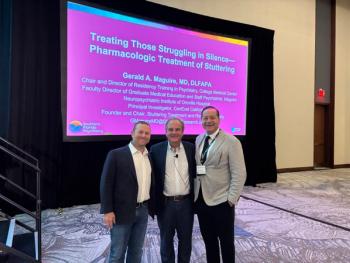
Gerald A. Maguire, MD highlights the need for psychiatric awareness and treatment of stuttering at the 2025 Southern Florida Psychiatry Conference.

Shulamit Bossewitch discussed nonpharmacological support for postpartum depression at the 2025 Southern Florida Psychiatry Conference.

How can the glutamate model overcome challenges in treating major depressive disorder?

Discover the latest insights from Southern Florida Psychiatry Conference on stuttering, its neurological basis, and innovative treatment approaches to improve quality of life for those affected.

Vagus nerve stimulation offers a promising solution for treatment-resistant depression, showcasing significant long-term efficacy and durability in patients.

What novel treatments can be game changers for major depressive disorder?

Experts at the Southern Florida Psychiatry Conference emphasize the importance of screening for postpartum depression, highlighting effective treatments and support strategies for new mothers' mental health.

Experts discuss the advantages of long-acting injectables in schizophrenia treatment, highlighting improved adherence, reduced relapse risk, and better patient outcomes.


Presenters at the Southern Florida Psychiatry Conference shared how prescription digital therapeutics can greatly improve patient outcomes.

Digital therapeutics revolutionize health care by enhancing patient outcomes through technology and offering scalable, evidence-based treatments for various conditions.

Welcome to Day 1 of So Flo Psychiatry!

Join the NCCHC 2025 Virtual Winter Conference for essential insights on correctional health care, featuring expert-led sessions and continuing education credits.

A recent study highlights lumateperone's effectiveness in preventing schizophrenia relapse, showcasing its potential for long-term treatment benefits.

Data presented at the ECNP Conference showed CT-155 has promise in reducing negative symptoms of schizophrenia.

New data indicates safety of seltorexant and its pharmacokinetics in treating adolescent depression, supporting its potential as an effective adjunct therapy.

New research reveals women with ADHD are diagnosed 5 years later than men, highlighting the need for improved awareness and early intervention.

Esketamine nasal spray shows significant improvements in treatment-resistant depression, with effective dose management and minimal adverse effects in recent studies.

New research highlights lumateperone's effectiveness as an adjunctive treatment for major depressive disorder, improving depressive symptoms and sexual function.

New phase 3 data highlights seltorexant's potential as a safer adjunctive treatment for major depressive disorder with insomnia, despite not meeting primary end points. Andrew J. Cutler, MD, shares his thoughts.

A phase 2 study reveals osavampator significantly reduces depression severity in adults with major depressive disorder, showing promise for treatment-resistant cases.

New analysis reveals Ingrezza achieves rapid symptomatic remission in tardive dyskinesia, enhancing patient quality of life and reducing disease burden.

New phase 3 data reveals seltorexant's potential as a safer adjunctive treatment for major depressive disorder with insomnia, despite not meeting its primary end point.

Esketamine nasal spray shows significant improvement in emotional blunting for treatment-resistant depression, offering hope for affected patients.
New study shows lumateperone (Caplyta) significantly improves symptoms in major depressive disorder with anxious distress, offering hope for treatment-resistant patients.

Half of patients with stuttering also experience anxiety, highlighting the psychiatrist’s role in care and support.

Because stuttering represents a spectrum disorder, a spectrum of treatments are needed.