




Schizophrenia/Psychosis
Latest News

Advertisement
Video Series

Latest Videos




Shorts

1:30
Late Responders in Long Term Treatment With Austedo for Tardive Dyskinesia
a month ago
by
Verena Ramirez-Campos, MD

1:16
Discussing LAIs Candidly With Patients
a month ago
by
Gerald A. Maguire, MD

1:09
Mental Health Awareness & Advancing Cholinergic Agents
2 months ago
by
Carey Martin, DNP, PMHNP

1:38
Assessing the Prodromal Period in Schizophrenia
4 months ago
by
Cheryl Corcoran, MD

2:20
Synaptic Regrowth: A Breakthrough for Schizophrenia
4 months ago
by
David Walling, PhD

2:00
Championship-Level Care in Psychiatry
7 months ago
by
Heidi Anne Duerr, MPH

0:26
Consider Catatonia in the Differential
10 months ago
by
Frank A. Clark, MD
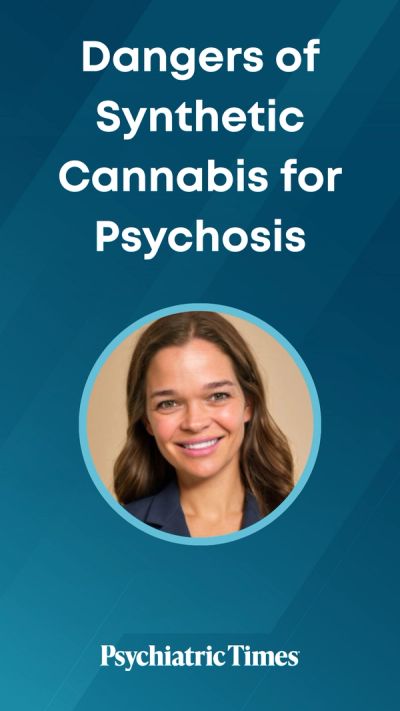
0:35
Dangers of Synthetic Cannabis for Psychosis
10 months ago
by
Jessie Hill, MD
Podcasts






CME Content







Advertisement
More News

DSM's real weakness isn't categories—it's weak science. Explore when disorders are diseases vs dimensions, and why overlap misleads.

Northwestern researchers identify a reduced CSF protein signal in schizophrenia and show a synthetic version restores brain circuit activity in mice.

Phase 2 ZEPHYR finds oral betovumeline combo reduces PANSS and improves cognition in acute schizophrenia, with generally mild side effects.

SIRS highlights new schizophrenia advances: LB-102 shows promise, Cobenfy switching stays stable, and tazbentetol targets synaptic regeneration.

How do you pick an LAI antipsychotic? Molecule first, delivery system second, Jacob Hanaie, PharmD, shared at SoCal Psychiatry.

Open-label phase 2 trial tests IV Briumvi alongside antipsychotics for treatment-resistant schizophrenia, targeting B-cell depletion to improve symptoms and assess safety.

Estrogen shapes schizophrenia in women: onset peaks, dosing shifts, and relapse risk from periods to pregnancy, postpartum, and menopause.

Learn how cognitive remediation, aerobic exercise, and reducing secondary risks can boost thinking skills and daily functioning in schizophrenia.

Key steps for first-episode psychosis: team-based care, low-dose meds, relapse planning, family support, and cannabis harm reduction.

Learn a multidimensional approach to suicide prevention in schizophrenia—screening, insight paradox, cannabis, cognition, trauma, and ethical AI monitoring.

Blood exosomal microRNA markers reveal oxidative-stress subtypes, predict psychosis conversion, and guide early, targeted treatments like MitoQ.

Phase 3 at-home data show sublingual dexmedetomidine cuts severe agitation in bipolar disorder and schizophrenia, supporting FDA label expansion.
Explore how integrated psychotherapy—CBTp, family support, and humane alliance—reduces relapse and restores meaning beyond medication in schizophrenia.

Why schizophrenia shortens life: smoking, metabolic risks, and care gaps drive a 15-year mortality loss—and clinicians can help close it.

Analysis of speech, acoustics, and facial cues reveals early psychosis and suicide risk.
Computational phenotyping reveals prodromal psychosis clues, connects biomarkers to symptoms, and shows why stress and cannabis reduction matters.

Study ties higher schizophrenia rates in Black Americans to neighborhood vulnerability, spotlighting faster early-psychosis care and social supports.
Key schizophrenia facts: early warning signs, brain changes, treatment limits—and how AI could reveal biomarkers for more personalized care.

Anosognosia drives untreated schizophrenia into homelessness and jail. Here's why civil care fails and how structured treatment can decrease the number of arrests.

New psychiatry drugs target dementia agitation, ADHD, depression, TRD, and schizophrenia—see which novel mechanisms may reach the FDA next.
Tracy Hicks, DNP, FNP/PMHNP-BC, outlines how personalized, team-based care and shared decision-making can improve schizophrenia outcomes in real-world practice.

Explore how neuromelanin-sensitive MRI noninvasively tracks long-term dopamine and noradrenaline system changes.

Learn how dual antipsychotics can mask the true cause of high prolactin, and how stepwise switches to aripiprazole or clozapine restore cycles.

New cohort and global data link teen high-potency cannabis use to higher psychosis, bipolar, and suicide risks. Here's what psychiatrists and mental health clinicians should know in the era of legalization.

Low soluble α2δ‑1 disrupts brain excitation‑inhibition balance in schizophrenia.
Advertisement
Advertisement
Trending on Psychiatric Times
1
Repurposing Dopamine Agonist Pramipexole for Disabling Anhedonia
2
Brain Trust: Anita H. Clayton, MD, on Diagnosing and Treating Sexual Dysfunction
3
GLP-1 Receptor Agonists Linked to Lower Mortality, Cardiovascular Events in Serious Mental Illness
4
When Treatment-Resistant Depression Means Mismatched: Rethinking Difficult-to-Treat Depression
5