How postmodern ideas shape DSM and the biopsychosocial model—why psychiatry needs method-based, truth-seeking care beyond consensus and eclecticism.

Dr Ghaemi is a lecturer on psychiatry at Harvard Medical School, Cambridge Health Alliance, and is employed by Bristol Myers Squibb. His latest book, Soul on Fire, explores Martin Luther King Jr and the Psychology of Nonviolence. Views shared by Dr Ghaemi are his own and do not necessarily reflect the official policy or position of his employers.
How postmodern ideas shape DSM and the biopsychosocial model—why psychiatry needs method-based, truth-seeking care beyond consensus and eclecticism.

DSM's real weakness isn't categories—it's weak science. Explore when disorders are diseases vs dimensions, and why overlap misleads.
Why DSM reforms miss psychiatry’s key flaw: weak diagnostic validity—and how evidence-based validators could reshape diagnosis, research, and care.

S. Nassir Ghaemi, MD, shares highlights from the ASCP task force consensus on psychiatric polypharmacy, emphasizing monotherapy and diagnostic reassessment.

DSM’s future adds biomarkers and context, yet validity remains unresolved—are diagnoses real? Critics urge an evidence-based overhaul.

Experts discuss diagnostic validators and the DSM.

American psychiatry struggles with understanding psychopathology, emphasizing the need to return to its roots for accurate diagnosis and effective treatment.

Explore the complexities of mental illness, its definitions, and the limitations of current psychiatric diagnosis in understanding true psychopathology.
American psychiatry reexamines its roots in psychopathology, challenging DSM's validity and advocating for a return to understanding mental illness.
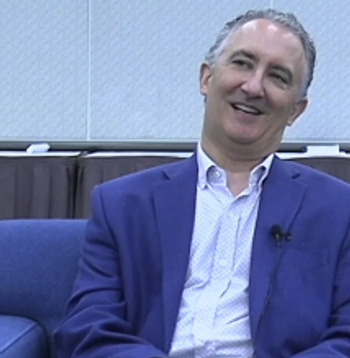
Although there are topics in psychiatry that not exciting, Dr Ghaemi sees plenty of opportunities.

Dr Nassir Ghaemi explores the long-term effects and safety of serotonin reuptake inhibitors, revealing benefits and potential risks.
Is adult ADHD validated by research? These authors think not.
"The history of psychiatry is a history of fads in theory, diagnosis, and treatment. Such rapid shifts in conceptualization—such as the emergence of the concept of adult ADHD—almost always warrant informed critical examination."

The risk of “false positive” screening in primary care settings is reduced by a thorough clinical evaluation.

This review highlights an important diagnostic and therapeutic task: the importance of differentiating true bipolar disorder/obsessive-compulsive disorder comorbidity from BD with secondary OCD.

Early on, psychiatry accepted the idea that unconscious psychology affected the body to cause disease. By the 1970s, the rise of psychiatric drugs pushed the field in a biological direction, and by the 1980s, psychoanalysis was in full retreat, at least in the halls of psychiatric power. S. Nassir Ghaemi, MD, adds to the debate.

Is bipolar disorder overdiagnosed? Underdiagnosed? Neither? In this podcast, Dr S. Nassir Ghaemi offers his perspective on those questions.
"The main problem here is not that past DSM leaders were derelict or purely political. The problem is that they now say that they would place science below pragmatism," according to this clinician.
If science is defined as some kind of systematic study of observed experience applied to hypotheses or theories, and then confirmation or refutation of those hypotheses or theories, followed by new hypotheses or theories that are further tested and refined by new observations – if this is the core of any scientific inquiry, I think that no objective observer can attribute the history of DSM-III, IV, and 5 to anything that approximates this process.
This psychiatrist's wish is that in one more generation, our profession will learn to go beyond DSM to the truths of science.

All psychiatry, anywhere in the world, is American psychiatry. This is both good and bad.

Planck's Law of Generations: scientific change doesn't happen by changing minds, but by changing generations.

It is clear that the leadership of DSM-IV, and of DSM-III before it, views psychiatric diagnosis in the DSM system as something that should be based on “pragmatism.”

Psychiatry is a profession that deeply needs honest workers who are willing to seek a knowing ignorance, to be dissatisfied, and to refuse to conform-doing so in the interest of the truth and of the profession, seeing both as inseparable.
Although the foundational and antifoundational traditions differ in their language and claims, both call into question the legitimacy of psychiatric diagnosis and treatment.

We will have many medications in the future, he prophesied; that will not be a problem. Our challenge will be in teaching doctors how to use them, “otherwise it would be like giving a driver’s license to someone who can’t drive.”

Critics have noted that meta-analysis, when misused, resembles statistical alchemy, taking the dross of individually negative studies to produce the gold of a positive pooled result.

Is combination therapy with lithium and valproate more effective in preventing relapses in patients with bipolar I disorder than monotherapy with either drug alone?
In the debates around DSM-5, a central figure has been Allen Frances, whose views seem to elicit sympathy from many unhappy with the DSM system (the 4th edition of which Dr. Frances led).
The term “evidence” has become about as controversial as the word “unconscious” had been in its Freudian heyday, or as the term “proletariat” was in another arena.

March 23rd 2026
October 27th 2025

December 5th 2025

December 3rd 2025
July 17th 2013