Brain on Fire: My Month of Madness
May 10, 2013
Psychiatrists who are concerned with the perils of misdiagnosing a psychiatric presentation as primary mental illness will find Susannah Cahalan’s Brain on Fire of great interest.
|
Psychiatric Times has contacted many of the nation’s leading psychiatrists to answer the following question: “What is the best advice you would give to a psychiatry resident?” In the series, you will find advice from psychiatrists who span the gamut of experience: clinicians to researchers to administrators, psychotherapists to psychopharmacologists, outpatient to inpatient, child to adult. It is our hope that you will find the advice practical as well as inspiring. Please check back each month to read from another Master Psychiatrist. The most recent contributor is Dr Sharon Packer, author of several books and a psychiatrist in private practice. Howard Forman, MD Fellow in the Division of Psychiatry and the Law Albert Einstein College of Medicine Dr Forman is a regular contributor to the Psychiatric Times Residents Blog at www.psychiatrictimes.com/blog/residents-corner. He is the Book Review Editor for Psychiatric Times.
What Is the Best Memory From My Years as a Resident?
H. Steven Moffic, MD
, April 27, 2012
The trouble with answering this question is that I couldn’t – and still can’t – recall the “best” memory. What much more readily came to mind are some of the worst memories.
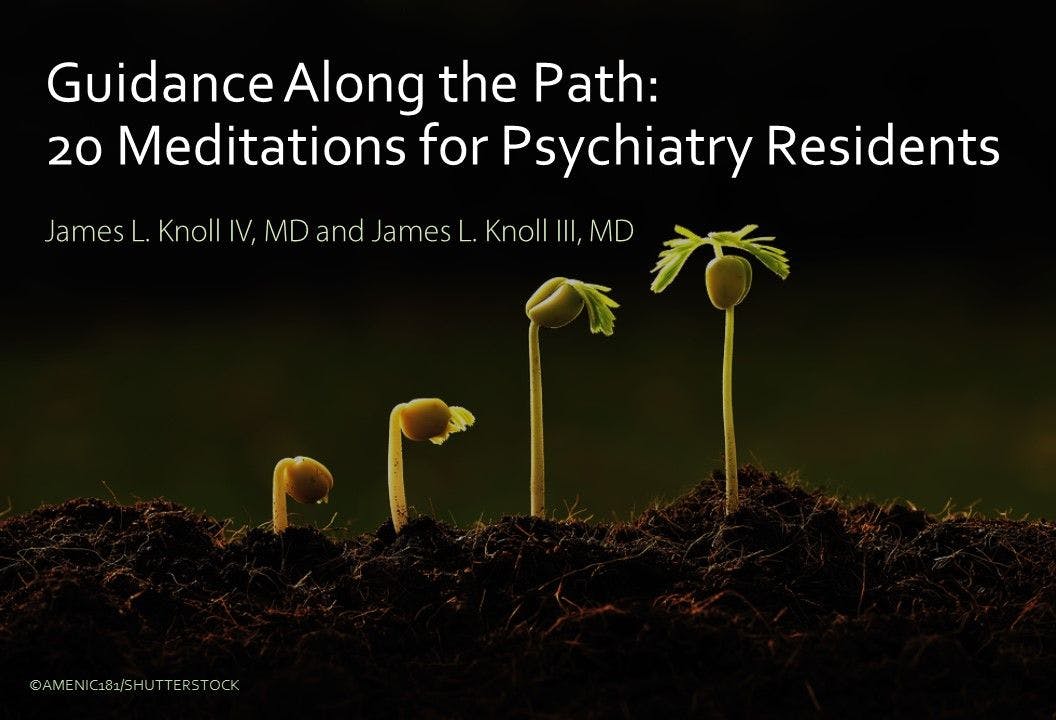
Twenty Meditations For Residents
James Knoll, IV, MD, and James Knoll, III, MD
, February 2, 2012
Father and son psychiatrists offer the following advice, in the Oslerian spirit of honoring and guiding trainees—today’s psychiatric residents—who will become tomorrow’s psychiatric leaders.
US Physicians and Burnout: Optimistic Psychiatrists Take Heart?
April 26, 2013
If you are a psychiatrist who tends to look on the bright side, you may find the results of a new physician survey to be relatively good. Psychiatrists report the lowest level of professional burnout and the lowest level of burnout severity across various specialties. But just how good is relatively good?
Grand Rounds Video: Neural Plasticity and Addiction
February 21, 2013
Although many symptoms of psychiatric disorders are likely due to maladaptive plasticity in mesolimbic dopamine reward pathways, there is still a shortage of data on the specific nature of this plasticity and the role it may play in influencing cognition and behavior. More in this video.
Grand Rounds: Neural Mechanisms of Mindfulness Training
February 4, 2013
Mindfulness training is a viable treatment tool that rivals psychopharmaceutical agents for the treatment of addictions, anxiety, depression, and other psychiatric disorders. In this video, Dr Judson Brewer describes the value of MT in psychiatry.
Balancing Your Professional and Personal Life (Part 1)
November 29, 2012
Career fulfillment, free time, maximum revenue—a perfect combination for every clinician—but seldom realized. Here, an expert on professional “burnout,” Dr Joseph Weiner discusses strategies that can enhance career satisfaction.
Brief Screening Tools Can Improve Patient Care
November 28, 2012
Medical colleagues routinely monitor patients with sphygmomanometers, peak flow meters, and glucometers. Similarly, psychiatrists can and should incorporate the use of screening tools to help with diagnosis and treatment management.
Comments from your peers on our website and across our social media sites: DSM-5: If You Don't Like the Effects, Look at the Causes •“‘Post-modern’” outlook on psychiatric diagnosis often leads to cynicism and nihilism—as if to say, ‘Nobody really knows anything about anything, and we shouldn’t trust anybody!’ Actually, there is a good deal of secure and well-founded scientific knowledge in psychiatry. ” Add your response... Migraine and Psychiatric Comorbidity •“Sleep-related bruxism is high among those with fibromyalgia, anxiety, and migraines—but it is often overlooked as a dental problem. A long-acting benzodiazepine at night can make a big difference in patients with migraines who clinch or grind their teeth.” Add your response... Can a Suicide Scale Predict the Unpredictable? •“The multifaceted nature of suicide requires both formal tools indicated in this article, as well as an awareness of changes in the patient (eg, outlook, behavior, attitude)—these and other factors may indicate suicide risk.” Add your response... Have something to say? Let us know.
Mini-Quiz: Electroconvulsive Therapy
April 10, 2013
Periprocedural advancements, including liberalization of concomitant and pre-treatment medications, add to the comfort and tolerability of ECT, but adverse effects do exist. More in this quiz.
Mini-quiz: Major Depressive Disorder
February 25, 2013
Major depression is a common chronic illness within the general US population. What is the approximate prevalence for MDD in the US population?
|
Five Steps to Improving Patient Access Judy Capko, May 21, 2013 Patient access is getting increased attention through reform initiatives. Here are five steps you can take to make sure patients get appropriate access to care in your office.
|
|