














The authors share evidence-based guidance for patient safety that minimizes suicide risk in medical settings.
The authors share evidence-based guidance for patient safety that minimizes suicide risk in medical settings.

The costs, risks, and considerations involved in treating addiction have upped the ante, as illustrated in this case.
Problems with any one of these domains can disrupt an individual’s capacity to sustain work capacity.

These 10 domains will help you determine if functional impairment exists, if it can be reversed, and if the patient can return to work.

She wondered what the secret was to life as a psychiatrist, a grieving daughter, and a new mother of twins.
Medical malpractice, a form of professional negligence, remains a heavily criticized legal solution for ensuring patient autonomy and competent health care.

Determining how to ensure delivery of excellent care while balancing medicolegal demands may seem to be an impossible task. When done in a collaborative way, safety planning can help the clinician better understand risk and targets for intervention.

Climate change poses one of the greatest threats to public health in modern times, and the mental health effects are no less concerning.

Medical students, psychiatry residents, and practicing psychiatrists from different backgrounds gathered with one purpose: “To increase awareness around the mental health needs of the 437,000 foreign nationals from 10 countries on Temporary Protected Status."
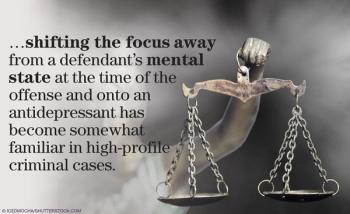
Neither time nor science has given pause to some attorneys who exploit the misunderstanding that surrounds the putative "criminogenic" effects of antidepressants.
Here: a review of the definition of sexual harassment, its prevalence among physicians and medical students, its potential impact on physicians and trainees, and guidance about its management.

Residency was going according to plan until a phone call changed everything.
When clinicians work without ready access to a security team or environmental safety protocols, early recognition is crucial to preventing or avoiding those rare occasions when behavior problems escalate.
Which patients are at greatest risk for premature death following discharge?
The points summarized in this pocket guide-drawn from actual cases-recur repeatedly as problems for practitioners.
Strategies to reduce aggression in psychiatric treatment settings.

The authors review the association between depression and violence, and the role that anger and emotional dysregulation play.

There is no predictive tool that is likely to have validity for rare outcomes such as terrorist attacks. More here.

Here's compelling reason for judicious use of restraint and seclusion, and a review of various alternative approaches.

In this Letter to the Editor, practicing psychiatrist Richard Krugley, MD makes the case against the term "assisted suicide" when applied to terminally ill patients. Drs. Pies and Geppert respond.

Here: a review of issues related to assessment of patients for suicide risk in the ED -- and an overview of emerging approaches and research that one day will lead to more reliable assessment and interventions based more on science than on art or luck.

“Googling” a patient does not seem much different from the old-fashioned obtaining of collateral information, but the ramifications may be far more than you bargain for.

The authors parse myths and facts about decisional capacity, with the goal of preserving patients' dignity and autonomy and helping you mediate conflicts, meet bioethical challenges, and provide compassionate resolutions.

The ability to diagnose pedophilia is key to preventing child sexual abuse: it makes possible accurate risk assessment and informed decisions regarding who is safe to work with children-and who is not.

A growing body of research has given us strategies at population, community, and clinical levels that can be put into practice. Details here.