




A transdisciplinary team summarizes key points and reflections after 18 months of activity.

A transdisciplinary team summarizes key points and reflections after 18 months of activity.

"It would be naïve to believe that targeting a single neurotransmitter, receptor, or circuit in the brain will cure any psychiatric or neurological disorder. However, we would be remiss if we did not try."
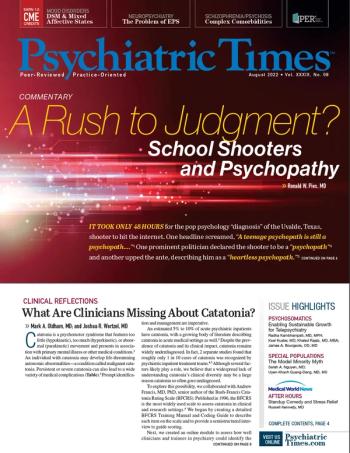
The experts weighed in on a wide variety of psychiatric issues for the August 2022 issue of Psychiatric Times.

These are the extra figures for John J. Miller, MD's article, "Serotonin: A Biography" from the 2022 September issue.

What are the long term psychiatric and neuropsychiatric complications of COVID-19?

Is the term, "extrapyramidal symptoms," an example of a “4-letter word”?

An estimated 5% to 10% of acute psychiatric inpatients have catatonia—yet catatonia remains widely underdiagnosed.

Survey results addressed connections between migraine and mental health, stigma, and treatment preferences.
Is our research about Alzheimer disease wrong?

How prioritizing brain health and brain skills could offer new solutions to this challenge.

"The young and exciting field of psychiatric pharmacogenomics is providing a third pillar of understanding to aid in our competent and informed prescribing of drugs, joining the more well-established pillars of pharmacokinetics and pharmacodynamics."

Understanding the intersection between substance misuse and acquired brain injury can assist clinicians in accurately diagnosing and treating these cooccurring conditions.

Over the past 6 months, Psychiatric Times has featured expert opinions on important psychiatric issues from psychosis to psychedelics.

Catch up on the latest research on ADHD, PTSD, and more with Psychiatric Times.
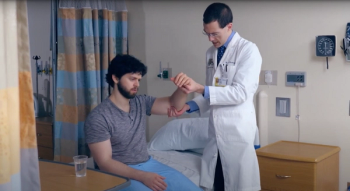
Despite its prevalence and clinical impact, catatonia remains widely underdiagnosed. What are clinicians missing?
An expert discusses the effects of long COVID on the brain at the 2022 APA Annual Meeting.
Is it ADHD—or something else? The importance of careful assessment for the proper diagnosis and effective treatment of the third most common mental health disorder worldwide.
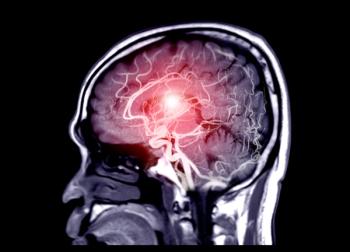
The neuropsychiatric implications of stroke are vast. Here's what you need to know to support your patients.

The 2022 APA Annual Meeting highlights the latest guidelines for these treatments, plus recommendations for updates and improvements.

Experts address cognitive dysfunction found in patients with long COVID at the 2022 APA Annual Meeting.

What are the neuropsychiatric effects of sparring in mixed martial arts? New research presented at the 2022 APA Annual Meeting elucidates the issues.

What are the neuropsychiatric effects of COVID-19, and how can we study them further?

Compelling new book discusses love, Alzheimer disease, and medical aid in dying.
"Physiologically speaking, what is a thought?” The truth is, we have been unable to answer this question—until now.

One author shares his experience with suicidal, psychotic depression and the life events that he connects to its origins.