

The first 2-3 years of children's lives are crucial.
The first 2-3 years of children's lives are crucial.

Here’s how complementary and alternative medicine modalities can help patients with a variety of mental health problems.

In the third episode of this series, experts weigh in on the impact of fraud at the executive level.
ADHD experts discuss the importance of an integrative approach in the treatment of adults with ADHD.
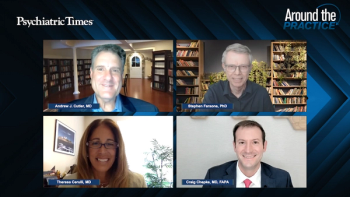
Stephen Faraone, PhD; Theresa Cerulli, MD; Craig Chepke, MD, FAPA; and Andrew J. Cutler, MD, discuss addressing non-adherence and the stigma of ADHD.

"You feel in your bones the gray gravity of late August clouds..."

Joy: not a frequent topic in psychiatry?

“I have found that community involvement is really key to a sense of belonging and really feeding our soul as we think about maintaining our mental health.”

Fentanyl is now available in ways it was not before, which may lead to fatal outcomes.
Drs Stephen Faraone, Theresa Cerulli, Craig Chepke, and Andrew J. Cutler discuss how to deal with other comorbidities when treating an adult with ADHD.
Experts in psychiatry provide insight on a patient case as well as discuss challenges with ADHD.
Stephen Faraone, PhD, presents the case of a 23-year-old patient with ADHD.

"Give me your tired, your poor, Your huddled masses yearning to breathe free, The wretched refuse of your teeming shore..."

Can a sense of awe help us medically?
A panel of ADHD specialists discuss the impact of treatment delay when dealing with an adult patient.
Drs Stephen Faraone, Theresa Cerulli, Craig Chepke, and Andrew J. Cutler discuss how to co-manage a patient with ADHD with other specialties.

"Patients get better, treatments end, openings appear in my schedule and I leave them open..."

Restorative justice: what is it?
When we take care of ourselves, we can take better care of our patients.
Experts in psychiatry discuss tips to differentiate between ADHD and other co-morbid psychiatric disorders.
Stephen Faraone, PhD; Theresa Cerulli, MD; Craig Chepke, MD, FAPA; and Andrew J. Cutler, MD, discuss factors which prompt adults for an ADHD consultation.
Stephen Faraone, PhD, presents the case of a 19-year-old male with ADHD.

"Moments like that, you can love this country..."

What is causing our mental health to go awry?

Misinformation and disinformation are widespread and having adverse effects on individuals’ health decisions. How can we address the problem?
Experts in psychiatry discuss the future of ADHD management as well as challenges when approaching treatment of adult ADHD.
Stephen Faraone, PhD; Theresa Cerulli, MD; Craig Chepke, MD, FAPA; and Andrew J. Cutler, MD, discuss efficacy and safety of treatment options in adults with ADHD.
Craig Chepke, MD, FAPA, and Andrew J. Cutler, MD, discuss unmet needs in adults with ADHD.

"We ate, and talked, and went to bed, And slept. It was a miracle."

"Oceans rise, empires fall, we have seen each other through it all..."