
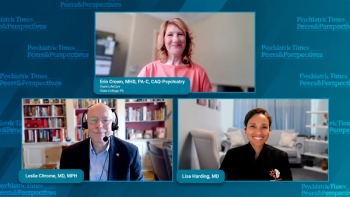
A patient's improving score does not always translate into a patient who feels better, and Erin Crown explains how anhedonia and cognitive symptoms account for the gap.
A patient's improving score does not always translate into a patient who feels better, and Erin Crown explains how anhedonia and cognitive symptoms account for the gap.
More than half of patients treated for depression don't believe full remission is achievable. The panel explores what success should mean to the patient in front of you, and why patients rarely admit they've stopped taking a medication.

Closing the discussion, the panel offers practical guidance on patient education, ongoing clinical learning, and community-based research opportunities to help clinicians move schizophrenia care forward.

Behind every extended-release stimulant is an engineering problem: how to release medication predictably over hours. The panel breaks down the microparticle and polymer technologies making that possible.
Caregivers carry an enormous, often invisible burden in schizophrenia care. The panel discusses how curiosity, communication, and community resources can support families while helping patients hold onto hope.
Sensory sensitivity, weekend flexibility, and hyperfocus all shape how adults actually take their ADHD medication. The panel explains why formulation choice can matter as much as the molecule.
A TSH alone usually suffices, serial testing can feed anxiety, and age-specific ranges matter, an endocrinologist tells psychiatrists.

Patients often wait years to seek therapy, arriving in crisis as gaps between prescribers and therapists slow coordinated care and complicate relationship healing.

Start low and go slow collides with therapeutic urgency more often than guidelines admit. Dr. DeBattista walks through the hepatic, renal, and cytochrome considerations that force a prescriber's hand.
The weeks spent waiting for an antidepressant to work are a window for dropout and risk. The panel debates who earns a faster-acting option up front and what monitoring that choice requires.
Explore why Hispanic patients may downplay mental health symptoms, how stigma widens the treatment gap, and how culturally responsive care builds trust.
Explore why culturally aware, collaborative psychiatric care improves outcomes for Hispanic patients—overcoming access and language barriers through trust, transparency, and shared decisions.
Universal IPV screening across care settings helps clinicians identify hidden abuse, avoid stereotypes, and support patients with nonjudgmental resources and ongoing care.
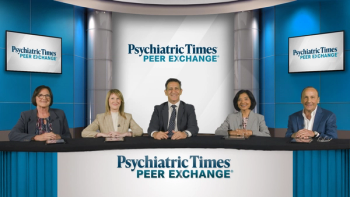
Treatment does not end with a prescription. The panel closes by examining who owns follow-up care, and why caregivers remain the true cornerstone of managing Alzheimer's agitation over time.
When first-line therapy falls short, the decision to augment or switch is rarely straightforward. The panel examines that decision-making process alongside neurology's evolving role in managing agitation.
IPV in men and LGBTQ+ patients often goes unseen; learn psychiatrist-led screening, safety planning, mandated reporting, and suicide-risk steps for outpatient care.
Standardized questionnaires matter, but Erin Crown leans on detailed conversation about a patient's daily routines to catch functional changes that no scale fully captures.
Can EEG microstates and brain imaging predict antipsychotic response?
Standardized rating scales define response and remission in clinical trials, but Erin Crown argues real recovery means returning fully to the life a patient had before depression began.
Reframe psychosis as upstream glutamate-GABA circuit imbalance, with dopamine disruption downstream; muscarinic drugs reduce symptoms and boost cognition.
Non-stimulants play a growing, specific role in adult ADHD care, from tolerability limits to emotional regulation. The panel details exactly when to add one to a treatment plan.
Most patients with schizophrenia never work, drive, or build a full independent life. The panel argues that celebrating small victories and raising expectations can meaningfully change that trajectory.
Beyond dopamine, new mechanisms targeting inflammation and glutamatergic pathways are reshaping the schizophrenia pipeline. The panel discusses which emerging agents hold the most promise for patients.
Immediate-release booster doses ask patients with executive dysfunction to remember, calculate, and decide, often at the worst possible moment. The panel explains why this adherence trap undermines treatment.
Clinics must adapt to REMS-style models as esketamine teaches supervision and reimbursement lessons ahead of psilocybin’s potential FDA clearance.
Motivational interviewing helps clinicians address antipsychotic ambivalence, using open-ended questions to connect LAIs or clozapine to patient goals over time.
A significant improvement on a rating scale can still leave a patient unable to function. Dr. DeBattista explains how he defines meaningful improvement and when non-response should change the plan.
One approval took decades and a stack of complete response letters. Dr. Clayton reviews where these two agents fit, what their trials showed, and why patient preference should drive the choice.

A distinct presentation, a growing evidence base, and specialized clinical expertise support formally recognizing postpartum psychosis in the next DSM update.
Psychedelic trials may face blinding failures; concerns around FDA safeguards, active comparators, and filmed sessions.