
Learn how psychiatrists ask about identity with curiosity, transparency, and cultural humility—building trust, reducing assumptions, and shaping culturally informed treatment plans.
Learn how psychiatrists ask about identity with curiosity, transparency, and cultural humility—building trust, reducing assumptions, and shaping culturally informed treatment plans.

Learn more about ADHD across populations in this podcast episode.
Explore why combining medication and psychotherapy often improves major depression outcomes, plus the latest debates on treatment sequencing and public trust in psychiatry.
Psychiatrists admit carrying benzos for travel sleep or anxiety; learn why experts say occasional use differs from dependence and withdrawal risk.
HLP003, a deuterated psilocin agonist, enters phase 3 as an add-on for MDD, aiming to boost SSRI/SNRI response earlier.
From tricyclics to esketamine, Ron Pies, MD, explains antidepressant progress and why precise diagnosis matters when treating today’s diverse depression.

Psychiatrists rebut antidepressant myths, outlining modest benefits, real but manageable risks, and why slow tapering matters for withdrawal.

Experts weigh MDMA-like entactogens for social anxiety and depression, neuroplasticity windows, and what FDA setbacks mean for next-wave treatments.

Experts unpack when benzodiazepines help or harm, tapering myths, older-adult risks, and why Alzheimer links may be overstated.
Michael Thase, MD, explores evolving treatment strategies for treatment-resistant depression, including interventional psychiatry and emerging therapies.
Gerald Maguire, MD, discusses the direct implications for diagnosis and prescribing in psychiatry.
Clinicians spot relapse sooner when wearable users stop charging devices—missing data becomes a signal, powering Google’s Sensor FM and Amae’s care.
Fitbit and voice biomarkers feed precision psychiatry, spotting early mood shifts and enabling low-risk interventions before crisis hits.
New ADHD option Simtriyo gains FDA approval as first NDSRI, showing benefits for teens and adults, including executive function and emotional control.
Learn how early antidepressant response guides faster treatment changes in major depression, with earlier use of esketamine, TMS, and ECT despite insurance barriers.
Learn how experts distinguish agitation from psychosis in Alzheimer disease, weigh new FDA options, and apply evidence for off-label care.

A student advocate focuses on policy, pushing campus naloxone, overdose training, and early prevention to curb South Carolina’s opioid deaths.
Low-dose TNX-102 SL targets sleep receptors for MDD, avoiding norcyclobenzaprine buildup and promising cleaner daytime tolerability in HORIZON trial.
Explore how TNX-102 SL aims to improve major depressive disorder by enhancing slow-wave sleep, as the HORIZON phase 2 trial tests nightly dosing.
Consensus definition clarifies Alzheimer agitation, reviews FDA-approved brexpiprazole and dextromethorphan-bupropion, and spotlights caregiver burden

How clinicians can provide stronger care for minority groups and have a culturally informed practice.
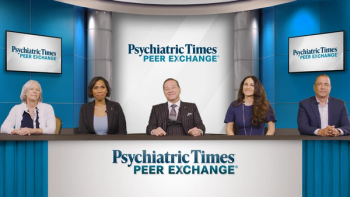
Fatigue and poor sleep send patients to primary care, but a CBC and a thyroid panel will not find depression. The panel examines what actually separates major depression from its mimics.
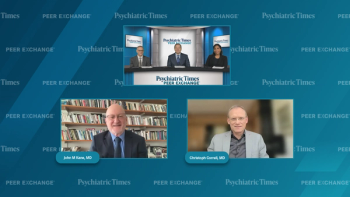
Clinicians outline ways to boost schizophrenia outcomes: team-and-family collaboration, early detection, medication access, measurement-based care.
New rapid-acting and long-acting injectables help bridge hospital-to-community care, cutting post-discharge nonadherence and relapse risk.
Depression rarely arrives named. The panel opens on the presentations that mask it, the risk factors worth flagging in primary care, and the lag between first symptom and adequate treatment.
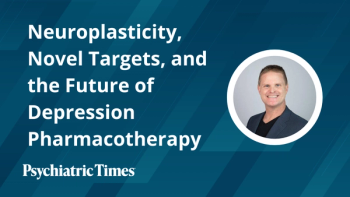
Explore next-gen depression therapies targeting neuroplasticity and why biomarkers may unlock precision psychiatry for MDD.
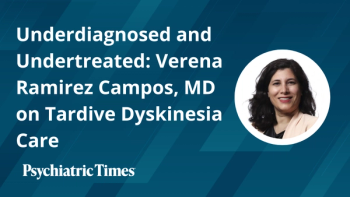
How Austedo’s VMAT2 inhibition reshapes tardive dyskinesia care, while real-world data reveal underdiagnosis, low uptake, and new studies ahead.

Experts unpack placebo and nocebo effects in psychiatry, revealing how expectation, framing, and alliance boost outcomes and curb side effects.

Three new Teva posters show Austedo sustains tardive dyskinesia improvement long term, works in real-world care, and education boosts diagnosis and visits.
Clinicians weigh telepsychiatry for schizophrenia, urge early long-acting injectables, and reveal tips on samples, coupons, and prior authorizations.