

We know who the TIME editors picked for Person of the Year, but what about the readers?

Dr Moffic is an award-winning psychiatrist who specializes in the social, cultural, ethical, spiritual, and religious aspects of psychiatry, and since 2012 is in retirement as a private pro bono community psychiatrist. A prolific writer and speaker, he has done a weekdays column titled “Psychiatric Views on the Daily News” and a weekly video, “Psychiatry & Society,” since the COVID-19 pandemic emerged. Among his diverse and rare combination of major awards for psychiatrists, he was selected to receive the international Oskar Pfister Award for his contributions to religion, spirituality, and psychiatry at the American Psychiatric Association (APA) annual meeting in May 2026. Previously, he was chosen to receive the 2024 Abraham Halpern Humanitarian Award from the American Association for Social Psychiatry; the 2016 Administrative Psychiatrist Award from the American Psychiatric Association; in 2002, the one-time designation of being a Hero of Public Psychiatry from the Speaker of the Assembly of the APA; at the turn of the new millennium, an APA Art Association award at the annual meeting for his displayed collage “Any Point of View (of Rusti) is Pure Delight”; and in 1991 the Exemplary Psychiatrist Award from the National Alliance for the Mentally Ill. He also presented the third Rabbi Jeffrey B. Stiffman lecture at Congregation Shaare Emeth in St. Louis on Sunday, May 19, 2024. He has been an advocate and activist for mental health issues related to climate instability, physical burnout, and xenophobia, among other social justice causes, serving on many related local and national community and professional Boards. He has edited the requested 5-volume series on religions and psychiatry for Springer: Islamophobia, anti-Semitism, Christianity, The Eastern Religions and Spirituality, and in 2026, the Second Edition of Islamophobia and Psychiatry. He serves on the Editorial Board of Psychiatric Times.
We know who the TIME editors picked for Person of the Year, but what about the readers?

Are you ready for 2022?

TIME’s People of the Year have closer ties to mental health than you think.

In psychiatry, as in journalism, truth, facts, and trust go hand in hand.

Humility and gratitude are among the lessons learned by this psychiatrist...

A change in the wind…

High winds and high anxiety—one doctor’s concerns about climate change feel justified.

Why don’t psychiatrists and mental health professionals ever seem to win People of the Year awards?

Thanks to climate change, weather disasters are neither unimaginable nor unbelievable.

The healing process of Braver Angels: should we all emulate it?

Have we seen this vision of mental health before?

What do psychiatrists wear during and after work, and what meaning does it hold?

Is this patient reaction the calm before the storm?

What do we know about the psychiatric implications of having an abortion and not having access to such services? And what are the medical ethics involved?

Thanksgiving may be over, but there's always time to be thankful.

“Senseless” is not the proper term to describe tragedies or violence.

Gratitude: the essence of psychology and psychiatry.
Memorials for Richard P. Gerhardstein, MD, should be sent to RIP Medical Debt, as Gerhardstein felt medical debt was a particularly problematic American injustice.
Charles Atkins, MD, knew better than anyone how to captivate a room full of people.

Carl Malmquist, MD: a man whose “mind was at home in the world.”

Is psychiatry doing enough to address societal challenges? We can honor those who have made a difference but have recently passed by taking up the charge.

A story of teamwork and lessons on resiliency...

We are all citizens of the same planet.

Take a look at this collection of articles from H. Steven Moffic, MD's series.
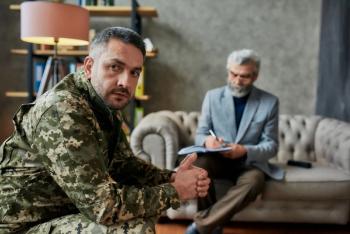
Psychedelics: returning hope to veterans with PTSD.

The new crisis hotline aims to enhance and complement, not replace, police with 24/7 local mental health crisis call centers, mobile crisis teaming, and crisis stabilization options.

“When you’re smiling, the whole world smiles with you…”

Talk to a veteran about their service today.

Do unto others as you wish them to do unto you: words that are more important than ever.

Aaron Feurstein and Malden Mills: a good example of how to prevent burnout.