
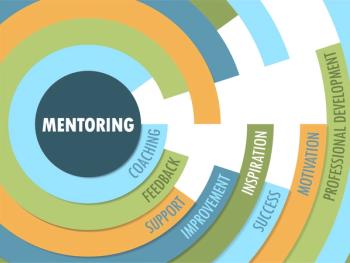
A psychiatric NP shares mentorship lessons, training fixes, and her Psych NP Boot Camp—plus practical tips to close prescriber gaps and improve team-based care.
How clinicians can provide stronger care for minority groups and have a culturally informed practice.
Frank Clark, MD, and Diego Regalado, MD, discussed cultural humility, mental health stigma in BIPOC communities, and strategies for delivering culturally responsive psychiatric care to patients, in this special episode of Psyched Perspectives for National Minority Mental Health Awareness Month.
Regalado, a fourth-year psychiatry resident and American Psychiatric Association (APA) Diversity Leadership Fellow, shared his background as a bilingual physician whose formative experiences—including language barriers, unfamiliarity with the US healthcare system, and the psychological challenges of acculturation—directly inform his approach to caring for immigrant and Hispanic patients. He reflected that acculturative stress and its downstream mental health consequences are profoundly underappreciated by clinicians who have not experienced them firsthand, and that these stressors do not affect patients in isolation but ripple through entire family units.1
Regalado emphasized the importance of prioritizing the social history over the review of psychiatric systems early in the clinical encounter, particularly with BIPOC patients. He posed that leading with social context communicates to the patient that they are seen as a person rather than a diagnostic category, and often reveals the contextual and relational drivers of distress that may be more clinically explanatory than any categorical diagnosis. He noted that for Hispanic patients specifically, proactive acknowledgment of mental health stigma—including the cultural equation of help-seeking with weakness or a failure of faith—within the first 10 minutes of an encounter can substantially lower defensive barriers and improve engagement.2 He also described intentionally demystifying the psychiatric encounter for patients who may have no prior exposure to mental health care, explaining what to expect in a manner analogous to pre-procedural informed consent.
Regalado described his ongoing social media-based education initiative in which he produces bilingual (English and Spanish) educational videos on psychiatric medications and common diagnoses, aimed at bridging the mental health literacy gap in Hispanic communities. He noted that viewer responses have reflected gratitude rather than the self-diagnosis he initially feared, and that the initiative has reached individuals who would not otherwise engage with mental health content. Clark highlighted the broader significance of Regalado's lived experience and visible identity as a Mexican-American physician as modeling the possibility of professional achievement and mental health recovery for communities that historically have lacked such representation.
Dr Regalado is a fourth-year psychiatry resident at the Greer Center for Psychiatry Residency Program in Greer, South Carolina, and an American Psychiatric Association Diversity Leadership Fellow.
Dr Clark is an outpatient psychiatrist at Prisma Health-Upstate and clinical associate professor at the University of South Carolina School of Medicine, Greenville. He served on the American Psychiatric Association’s Task Force to Address Structural Racism Throughout Psychiatry, and he currently serves as the Diversity and Inclusion section editor and advisory board member for Psychiatric Times.
References
1. Mallonee J, Escalante R, Robles EH, Tucker C.
2. Velasco-Mondragon E, Jimenez A, Palladino-Davis AG, et al.