Review news from the last week in pharmacology, legislation, and research.
Bessel van der Kolk, MD, argues that trauma is rooted in attachment and that psychedelic-assisted therapy may help where medications have not.
In this episode of “Brain Trust: Conversations in Psychopharmacology,” host Joseph F. Goldberg, MD, of the Icahn School of Medicine at Mount Sinai, spoke with Bessel van der Kolk, MD, author of The Body Keeps the Score. They discussed how clinicians should define trauma, why medications often fall short, and where psychedelic-assisted therapy may fit.
Van der Kolk distinguished painful life events from trauma. In his view, an event becomes traumatic when it leaves a person unable to speak or act and no one is there to restore a sense of safety. He argued that much of what is called trauma is really a disorder of attachment: harm caused by the very person who is supposed to provide comfort.
He recommended starting an assessment with current functioning rather than trauma history, then asking how long the problem has lasted. In his view, trauma changes perception broadly. It produces a hypersensitive nervous system that affects cognitive, emotional, sensorimotor, and immune functioning, not just reactions to specific reminders.
Van der Kolk, who ran early selective serotonin reuptake inhibitors (SSRIs) trials in posttraumatic stress disorder (PTSD), said antidepressants have not worked well for patients with substantial trauma histories. In his National Institutes of Health-funded trial, 88 participants with PTSD were randomly assigned to eye movement desensitization and reprocessing (EMDR), fluoxetine, or placebo for 8 weeks. At 6-month follow-up, 75.0% of participants with adult-onset trauma who received EMDR had no remaining symptoms. The rate was 33.3% for those with child-onset trauma, and no one in the fluoxetine group reached that point.1
“EMDR was the first time that I saw people getting better,” van der Kolk said. He added that EMDR alone often was not enough for patients with early, chronic abuse and neglect.
He criticized the DSM for rejecting developmental trauma disorder. He noted that these patients often meet criteria for attention-deficit/hyperactivity disorder, bipolar disorder, and depression at the same time, a pattern that can drive heavy polypharmacy. He also questioned low-dose antipsychotics in this group, arguing that blocking dopamine can dull motivation and pleasure. As alternatives, he pointed to action-oriented and body-based approaches such as yoga, martial arts, and bodywork, as well as neurofeedback and psychedelic-assisted therapy.
Van der Kolk was an investigator in the phase 3 MAPP1 trial, in which 90 participants with severe PTSD were randomly assigned to manualized therapy with 3,4-methylenedioxymethamphetamine (MDMA) or with placebo. MDMA led to significantly larger reductions on the Clinician-Administered PTSD Scale for DSM-5 (CAPS-5) (P<0.0001, d=0.91).2 According to van der Kolk, most participants had histories of chronic childhood abuse and neglect, yet they improved in self-compassion, emotion regulation, substance use, and interpersonal functioning.
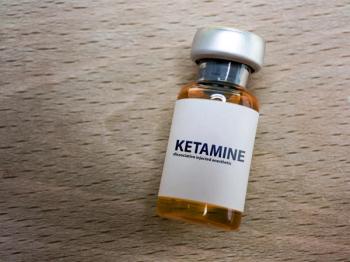
He credited part of the benefit to a restored sense of time: patients come to recognize that the trauma “happened then; it’s not happening now.” He stressed the importance of set and setting, warning that reliving trauma alone in a highly neuroplastic state may retraumatize. He advised against psychedelics for patients with psychotic tendencies. In clinical practice, he said, he would not necessarily taper SSRIs before therapy, although they may slightly weaken its effects. In his own practice, where he cannot legally use MDMA, he uses ketamine and reports results similar to those seen with MDMA.
He was openly critical of the US Food and Drug Administration’s 2024 decision not to approve MDMA-assisted therapy.3 He also warned that if clinicians become careless as these agents become more available, the harms seen in the 1960s could return.
“We tend to say this patient is treatment resistant,” he said. “But I like to say actually you may be learning resistant.”
Dr Goldberg is a clinical professor of psychiatry at The Icahn School of Medicine at Mount Sinai in New York, NY and the immediate-past president of the American Society of Clinical Psychopharmacology.
Dr van der Kolk is a psychiatrist, researcher, and author of the New York Times best-selling book The Body Keeps the Score.
References
1. van der Kolk BA, Spinazzola J, Blaustein ME, et al. A randomized clinical trial of eye movement desensitization and reprocessing (EMDR), fluoxetine, and pill placebo in the treatment of posttraumatic stress disorder: treatment effects and long-term maintenance. J Clin Psychiatry. 2007;68(1):37-46.
2. Mitchell JM, Bogenschutz M, Lilienstein A, et al. MDMA-assisted therapy for severe PTSD: a randomized, double-blind, placebo-controlled phase 3 study. Nat Med. 2021;27(6):1025-1033.
3. Duerr HA. FDA issues CRL to Lykos for MDMA-assisted therapy. Psychiatric Times. August 10, 2024.