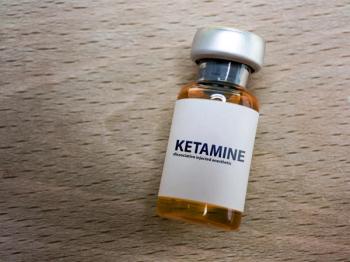
2R,6R-HNK reproduces ketamine’s rapid antidepressant profile in rodents without dissociation or abuse signals, and is now in four phase 2 trials.

An NIH-led team describes how a non-NMDA-blocking ketamine metabolite moved from back-translational discovery to 4 ongoing phase 2 trials.
“Psychopharm Today” is a video-podcast series, created collaboratively with the
In this episode of “Psychopharm Today,” host Jenessa Johnston and guests Carlos Zarate, MD; Todd Gould, MD; and Craig J. Thomas, PhD, discussed the discovery and clinical development of 2R,6R-hydroxynorketamine (2R,6R-HNK) for depression and pain.
The work began as a back-translational question. Clinical studies of intravenous ketamine in treatment-resistant depression showed a reproducible pattern—antidepressant effects within hours of a single infusion, persisting roughly 1 to 2 weeks—that did not match ketamine’s short half-life of a few hours. Metabolite analyses in well-characterized research participants identified hydroxynorketamines with measurable levels lasting 3 to 7 days in some individuals, paralleling the onset-offset curve of the antidepressant response and raising the possibility that ketamine functions as a prodrug.
Because ketamine generates roughly 2 dozen metabolites within minutes in both rodents and humans, isolating the active species required dedicated synthetic chemistry. At the National Center for Advancing Translational Sciences, Pat Morris synthesized the approximately 20 naturally occurring ketamine metabolites, characterizing 5 to 10 in appreciable quantity. Of these, 2R,6R-HNK—one of 12 hydroxynorketamines formed from ketamine—emerged quickly as the lead candidate. It was active in multiple preclinical assays, produced no sedative or dissociative effects, and showed favorable pharmacokinetics.
Two preclinical experiments were pivotal. A ketamine analog engineered to resist metabolism to 6-hydroxynorketamines showed reduced antidepressant-like activity, indicating the biotransformation was necessary for ketamine’s full effect. Separately, 2R,6R-HNK itself reproduced ketamine’s rodent profile: rapid antidepressant-like onset with effects sustained for days after drug clearance.1
Unlike ketamine, 2R,6R-HNK is not a potent NMDA receptor antagonist.2 In animal models it produced no dissociation, dizziness, or signals of abuse potential — findings the investigators said have so far held in a completed phase 1 study. The mechanism remains unresolved, and whether antidepressant and analgesic effects share a common target is an active research question.
“We hope that there is a common mechanism, and it’s a big, a major effort for the teams that are working on this is to uncover that mechanism,” said Craig Thomas, PhD, of NCATS.
Development was conducted in-house by NIH and the University of Maryland rather than through industry partnership, which the investigators said preserved scientific control over the program. Four phase 2 trials are now underway. Initial focus is treatment-resistant depression, with additional interest in pain, obsessive-compulsive disorder, anhedonia, and bipolar depression. Because the prodrug hypothesis implies shared pharmacology, the investigators noted that patients who do not respond to ketamine would not be expected to respond to 2R,6R-HNK; the favorable tolerability profile, however, may permit earlier intervention in the course of illness.
Dr Johnston is a postdoctoral fellow at National Institute of Mental Health.
Dr Zarate is the chief of the Section on the Neurobiology and Treatment of Mood Disorders, and chief of Experimental Therapeutics and Pathophysiology Branch at the National Institute of Mental Health. He is also a clinical professor of Psychiatry and Behavioral Sciences at The George Washington University.
Dr Thomas is a senior scientist at Precision Therapeutics & Translational Technologies.
Dr Gould is a neuropharmacologist and professor in the department of psychiatry at the University of Maryland Baltimore School of Medicine.
References
1. Zanos P, Moaddel R, Morris PJ, et al.
2. Highland JN, Zanos P, Riggs LM, et al.