

Andrew A. Nierenberg, MD, explains how a learning health network helps clinicians measure outcomes and redesign bipolar disorder care together with patients.
Andrew A. Nierenberg, MD, explains how a learning health network helps clinicians measure outcomes and redesign bipolar disorder care together with patients.
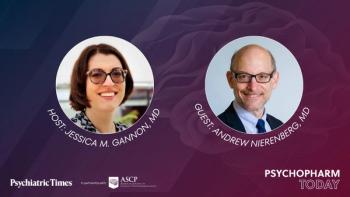
Andrew A. Nierenberg, MD, explains how the Bipolar Action Network uses shared data and improvement science to change how bipolar disorder care is delivered.

Maurizio Fava, MD, discusses treatment-resistant depression, the placebo response, ketamine research, mentorship, and where AI fits into psychiatry's future.
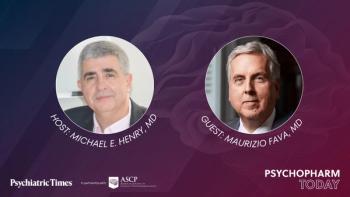
Learn insights from an early investigator of treatment-resistant depression and expert in the field.

Entactogen research targets social anxiety and isolation across diagnoses, pairing “plasticity windows” with psychotherapy amid shifting FDA scrutiny and evolving trial designs.

Experts weigh MDMA-like entactogens for social anxiety and depression, neuroplasticity windows, and what FDA setbacks mean for next-wave treatments.

ASCP updates spotlight ketamine safety guardrails, at‑home agitation therapy, psilocybin phase 3 momentum, and biomarker-driven precision psychiatry.
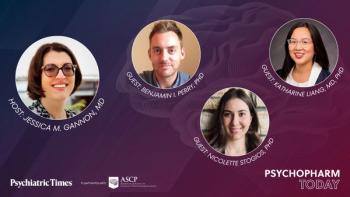
Experts urge metabolic screening across psychiatric diagnoses, spotlighting tailored interventions and tools like PsyMetRiC—while warning risk talks can backfire.
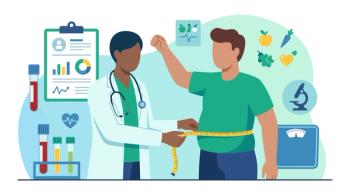
Experts explain why every diagnosis needs metabolic screening, how to discuss risk safely, and when to use tools like PsyMetRiC to assess risk.
Let's take a look at the next generation of pharmacotherapies for mood and anxiety disorders.

In this inaugural episode, experts discuss the limitations of current diagnosis-based frameworks in suicide research, emphasizing the need for more targeted interventions.
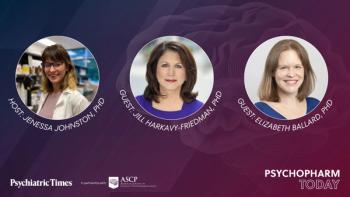
In the first ever episode of "Psychopharm Today," experts unpack why suicide needs its own research, how to design targeted studies, and what clinicians can do beyond diagnosis to reduce risk.
APA’s upcoming DSM shifts from “statistical” to “scientific,” adding dimensional, contextual, and biological factors to modernize diagnosis and address past critiques.
After FDA’s new warning, experts stress controlled data show acetaminophen in pregnancy isn’t tied to autism or ADHD; confounding fuels scares.
APA’s next DSM rebrands and adds context, cross-cutting symptoms, and biomarker-ready science to sharpen diagnoses and personalize psychiatric care.
New analysis finds postpartum depression and postpartum psychosis have distinct underlying biological mechanisms.

S. Nassir Ghaemi, MD, shares highlights from the ASCP task force consensus on psychiatric polypharmacy, emphasizing monotherapy and diagnostic reassessment.
ASPIRE survey reveals fatigue and cognitive impairment reduce work abilities and quality of life in narcolepsy and idiopathic hypersomnia, exposing unmet needs.
ASCP awardee Leslie Citrome explains why effect size, NNT, and NNH beat P-values, helping clinicians choose treatments tailored to each patient.

At the 2026 ASCP Annual Meeting, Eric Konofal, MD, PhD, argued that sleep assessment should become a routine part of ADHD evaluation and treatment.

Phase 3 data show COMP360 psilocybin rapidly lifts treatment-resistant depression, with durable MADRS gains and stronger effects from 2 sessions.

A phase 2b/3 trial of Forvisirvat in major depressive disorder is investigating potential sex-specific antidepressant effects in women.
Expert psychiatrists share new ASCP deprescribing guidance, tackling overprescribing, primary-care challenges, and practical tapering strategies to improve safer, patient-centered mental health care.
Clinicians explore transdiagnostic anhedonia—reward learning, loneliness, and digital rewards—offering practical ideas to personalize treatment.
New real-world data in obese, antidepressant-naive patients with MDD shows bupropion edging SSRIs on remission, though rates stay low.
Investigational depression drugs target SIRT6 epigenetics, histamine H3, and AMPA.
The ASCp meeting spotlights a fast-acting psychedelic for postpartum depression, vasopressin-targeting drugs, and ketamine’s promise for Parkinson symptoms.
Researchers at the ASCP Annual Meeting reported on how impaired brain insulin signaling may predict worsening depression severity and the links between metabolism and mood.
ASCP 2026 leaders share practical ways to engage patients in acute psychosis—active listening, noncollusive language, and rapport before assessment.