
Phase 2 trial shows daridorexant boosts pediatric insomnia sleep time up to 50 minutes, including ADHD/ASD patients, with strong safety and phase 3 plans.

Ms Walters is the assistant editor of Psychiatric Times.
Phase 2 trial shows daridorexant boosts pediatric insomnia sleep time up to 50 minutes, including ADHD/ASD patients, with strong safety and phase 3 plans.

New automated connectomics maps synapses across circuits, revealing how inhibitory neuron subtypes shape decision-making and may explain circuit dysfunction in psychiatric disorders.

Sleep disruption fuels Alzheimer risk via apnea, fragmentation, and inflammation; improving consolidated sleep, medication review, and sleep-specialist teamwork may protect cognition.

Ketamine or esketamine during C-section anesthesia lowers early postpartum depression symptom scores in trials, hinting at a new prevention approach under study.

Real-world data show TRD costs spike during resistant episodes; Compass’ psilocybin COMP360 delivers durable symptom relief through 26 weeks, potentially easing resource strain.

Review top pipeline updates from last week.
Once-monthly subcutaneous olanzapine TEV-749 shows sustained stabilization and remission in schizophrenia, supports direct switching, and avoids post-injection monitoring.

Real-world data links once-monthly Uzedy to fewer ER visits, better adherence, and lower costs—plus fewer bipolar I relapses when switching from pills.

Experts highlight biomarker-driven schizophrenia care—computational subtypes, muscarinic drugs, sharper negative-symptom scoring, and KCC2 targets—reducing trial-and-error prescribing.

Panelists explain why precision tools lag in schizophrenia care and highlight simple biomarkers, faster deals, and clinician-industry collaboration.

Adolescent synaptic pruning may fuel schizophrenia; researchers explore how restoring plasticity could ease fixed delusions.
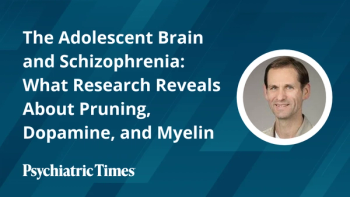
Primate brain tissue studies track pruning, myelination, and dopamine across development, revealing adolescence-linked neural dynamics that may explain schizophrenia risk.

Phase 3b data show centanafadine reduces adult ADHD and comorbid anxiety.

FDA hearing spotlights debates over psychedelic therapy: who administers, how to prove efficacy, and how to track safety as approvals near.

New research maps an mPFC–zona incerta circuit that drives punishment-resistant binge eating and hints at personalized brain stimulation targets for better treatment.
Catch up on last week's news in psychiatry.

Phase 1 driving simulation finds bedtime GlyphAllo for major depressive disorder shows no next-morning driving impairment, while advancing allopregnanolone-based oral treatment development.
Catch up on psychiatry news from last week.

Review the developments in GLP-1s in 2026.

ACP outlines ethical AI use in medicine—protect patient trust, curb bias, prevent deskilling, and guide transparent, equitable care.
Review news in psychiatry from the last week.

New donanemab dosing cuts ARIA-E risk, speeds MRI monitoring, and shows durable 3-year benefits with lasting biomarker gains in early Alzheimer’s.

Recap Alzheimer disease updates from August.

Plasma P-tau217 blood tests match amyloid PET for early Alzheimer pathology, offering scalable, noninvasive detection and forecasting cognitive decline risk years ahead.
See the latest in this psychiatric news roundup.
A quick recap of the last week in psychiatric news.

FDA approves PET imaging agent for Alzheimer disease tau pathology.
KINECT-PRO shows Ingrezza eases tardive dyskinesia movements and boosts daily function and quality of life, even across psychiatric diagnoses.

New data show once-daily CTx-1301 delivers 3 timed dexmethylphenidate releases for faster onset, steadier late-day ADHD coverage, tolerability.

Review the latest developments in narcolepsy treatment.