Closing the discussion, the panel offers practical guidance on patient education, ongoing clinical learning, and community-based research opportunities to help clinicians move schizophrenia care forward.
Closing the discussion, the panel offers practical guidance on patient education, ongoing clinical learning, and community-based research opportunities to help clinicians move schizophrenia care forward.
Caregivers carry an enormous, often invisible burden in schizophrenia care. The panel discusses how curiosity, communication, and community resources can support families while helping patients hold onto hope.
Most patients with schizophrenia never work, drive, or build a full independent life. The panel argues that celebrating small victories and raising expectations can meaningfully change that trajectory.
Beyond dopamine, new mechanisms targeting inflammation and glutamatergic pathways are reshaping the schizophrenia pipeline. The panel discusses which emerging agents hold the most promise for patients.
Real-world results and a personal caregiver's story build the case for starting a muscarinic agonist earlier, even at first break, rather than waiting until other options are exhausted.
A newly approved muscarinic agonist offers a genuinely different mechanism for treating schizophrenia. The panel explains how it works and why most are choosing to add it rather than switch.
Deciding when and how to change a schizophrenia treatment plan requires curiosity, comparative evidence, and careful sequencing. The panel discusses long-acting injectables, combination strategies, and when clozapine becomes the right next step.
From long-acting injectables to rational combination therapy, the panel maps today's treatment landscape, weighing efficacy against adverse events and stressing the
Being out of the hospital is not the same as being well. The panel makes the case for measurement-based care and more ambitious, individualized treatment goals for patients living with schizophrenia.
Negative and cognitive symptoms shape daily functioning far more than clinicians often recognize. The panel discusses building trust, using structured tools, and addressing tardive dyskinesia to close a persistent care gap.
A detailed case study reveals how positive, negative, and cognitive symptoms can persist for years even when a patient appears clinically stable, challenging the panel to define what genuine functional recovery should look like.
Despite effective treatments, most patients with schizophrenia go undertreated. The panel examines how stigma, fear, and outdated expectations for recovery continue to limit both patients and the clinicians who treat them.
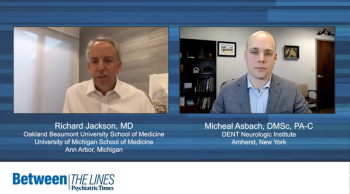
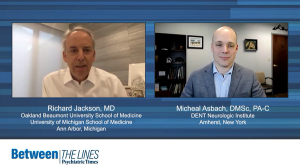
Richard Jackson, MD, and Micheal Asbach, DMSc, PA-C, provide their key takeaways from these studies and insights on how providers can assess the impact of of tardive dyskinesia (TD) in every visit.
Richard Jackson, MD, and Micheal Asbach, DMSc, PA-C, discuss the physical, psychological, and social impacts of of tardive dyskinesia (TD) and how it may affect a patient’s underlying conditions.
Richard Jackson, MD, and Micheal Asbach, DMSc, PA-C, discuss the impact of of tardive dyskinesia (TD) on a caregiver’s life and work, highlighting the need for clinicians to support all allies in their patient’s support network.
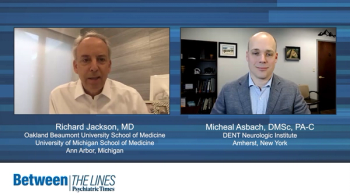
Richard Jackson, MD, and Micheal Asbach, DMSc, PA-C, provide an overview of tardive dyskinesia (TD) and highlight recent studies that assessed the burden of TD on patients.
In an upcoming Between the Lines program, thought leaders discuss the results from studies by Jain and colleagues published in 2023 that reviewed the self-reported professional, emotional, and interpersonal effects of tardive dyskinesia on both patients and their caregivers.
May 20th 2024

May 20th 2024

May 20th 2024
May 20th 2024