




Schizophrenia/Psychosis
Latest News
Advertisement
Latest Videos






Shorts

1:30
Late Responders in Long Term Treatment With Austedo for Tardive Dyskinesia
2 months ago
by
Verena Ramirez-Campos, MD

1:16
Discussing LAIs Candidly With Patients
3 months ago
by
Gerald A. Maguire, MD

1:09
Mental Health Awareness & Advancing Cholinergic Agents
3 months ago
by
Carey Martin, DNP, PMHNP

1:38
Assessing the Prodromal Period in Schizophrenia
5 months ago
by
Cheryl Corcoran, MD

2:20
Synaptic Regrowth: A Breakthrough for Schizophrenia
5 months ago
by
David Walling, PhD

2:00
Championship-Level Care in Psychiatry
8 months ago
by
Heidi Anne Duerr, MPH

0:26
Consider Catatonia in the Differential
a year ago
by
Frank A. Clark, MD
0:35
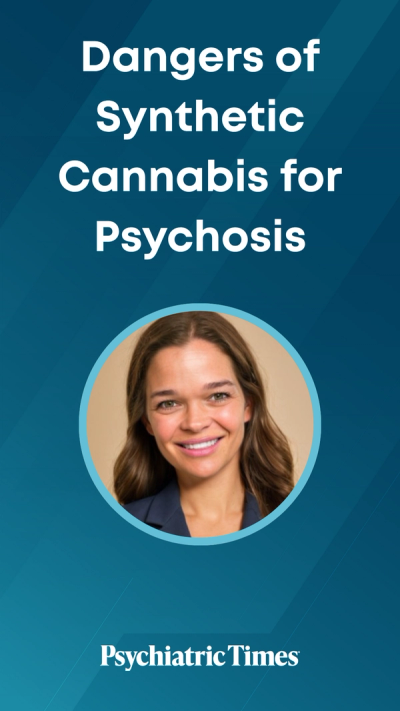
Dangers of Synthetic Cannabis for Psychosis
a year ago
by
Jessie Hill, MD
Podcasts

CME Content






Advertisement
More News

Learn how cognitive remediation, aerobic exercise, and reducing secondary risks can boost thinking skills and daily functioning in schizophrenia.

Key steps for first-episode psychosis: team-based care, low-dose meds, relapse planning, family support, and cannabis harm reduction.

Learn a multidimensional approach to suicide prevention in schizophrenia—screening, insight paradox, cannabis, cognition, trauma, and ethical AI monitoring.
New spectral sleep analysis and HD‑tDCS aim to strengthen restorative sleep and memory, offering promise for schizophrenia-related cognitive deficits.

Delphi panel reveals how NPs and PAs can talk about long-acting injectables earlier in schizophrenia, boosting adherence and cutting relapse.

Blood exosomal microRNA markers reveal oxidative-stress subtypes, predict psychosis conversion, and guide early, targeted treatments like MitoQ.

Phase 3 at-home data show sublingual dexmedetomidine cuts severe agitation in bipolar disorder and schizophrenia, supporting FDA label expansion.

ASCP 2026 leaders share practical ways to engage patients in acute psychosis—active listening, noncollusive language, and rapport before assessment.

Curiosity, rapport, and understanding lived experience can strengthen schizophrenia care and treatment engagement, according to Tracy Hicks, DNP.

Explore how integrated psychotherapy—CBTp, family support, and humane alliance—reduces relapse and restores meaning beyond medication in schizophrenia.
Olanzapine-samidorphan keeps olanzapine efficacy yet limits weight gain, boosts negative symptoms, and cuts ER visits in real-world care.

Why schizophrenia shortens life: smoking, metabolic risks, and care gaps drive a 15-year mortality loss—and clinicians can help close it.

Analysis of speech, acoustics, and facial cues reveals early psychosis and suicide risk.
Computational phenotyping reveals prodromal psychosis clues, connects biomarkers to symptoms, and shows why stress and cannabis reduction matters.

Study ties higher schizophrenia rates in Black Americans to neighborhood vulnerability, spotlighting faster early-psychosis care and social supports.
Key schizophrenia facts: early warning signs, brain changes, treatment limits—and how AI could reveal biomarkers for more personalized care.

Anosognosia drives untreated schizophrenia into homelessness and jail. Here's why civil care fails and how structured treatment can decrease the number of arrests.

New psychiatry drugs target dementia agitation, ADHD, depression, TRD, and schizophrenia—see which novel mechanisms may reach the FDA next.
Tracy Hicks, DNP, FNP/PMHNP-BC, outlines how personalized, team-based care and shared decision-making can improve schizophrenia outcomes in real-world practice.

Explore how neuromelanin-sensitive MRI noninvasively tracks long-term dopamine and noradrenaline system changes.

Learn how dual antipsychotics can mask the true cause of high prolactin, and how stepwise switches to aripiprazole or clozapine restore cycles.

New cohort and global data link teen high-potency cannabis use to higher psychosis, bipolar, and suicide risks. Here's what psychiatrists and mental health clinicians should know in the era of legalization.

Low soluble α2δ‑1 disrupts brain excitation‑inhibition balance in schizophrenia.

The SPAN survey underscores gaps in schizophrenia care access as new treatments emerge, citing coverage and continuity challenges.

New data shows stable symptoms when switching from atypical antipsychotics to Cobenfy using cross-titration.
Advertisement
Advertisement
Trending on Psychiatric Times
1
Olanzapine LAI (Weltruza) Receives FDA Approval for Schizophrenia
2
The New, Impending Adult ADHD Guidelines
3
Two New MDD Approvals: 5-HT1A Agonism and Adjunctive Atypical Antipsychotics
4
Moving Away From Treatment-Resistant Depression and Toward Difficult-to-Treat Depression
5