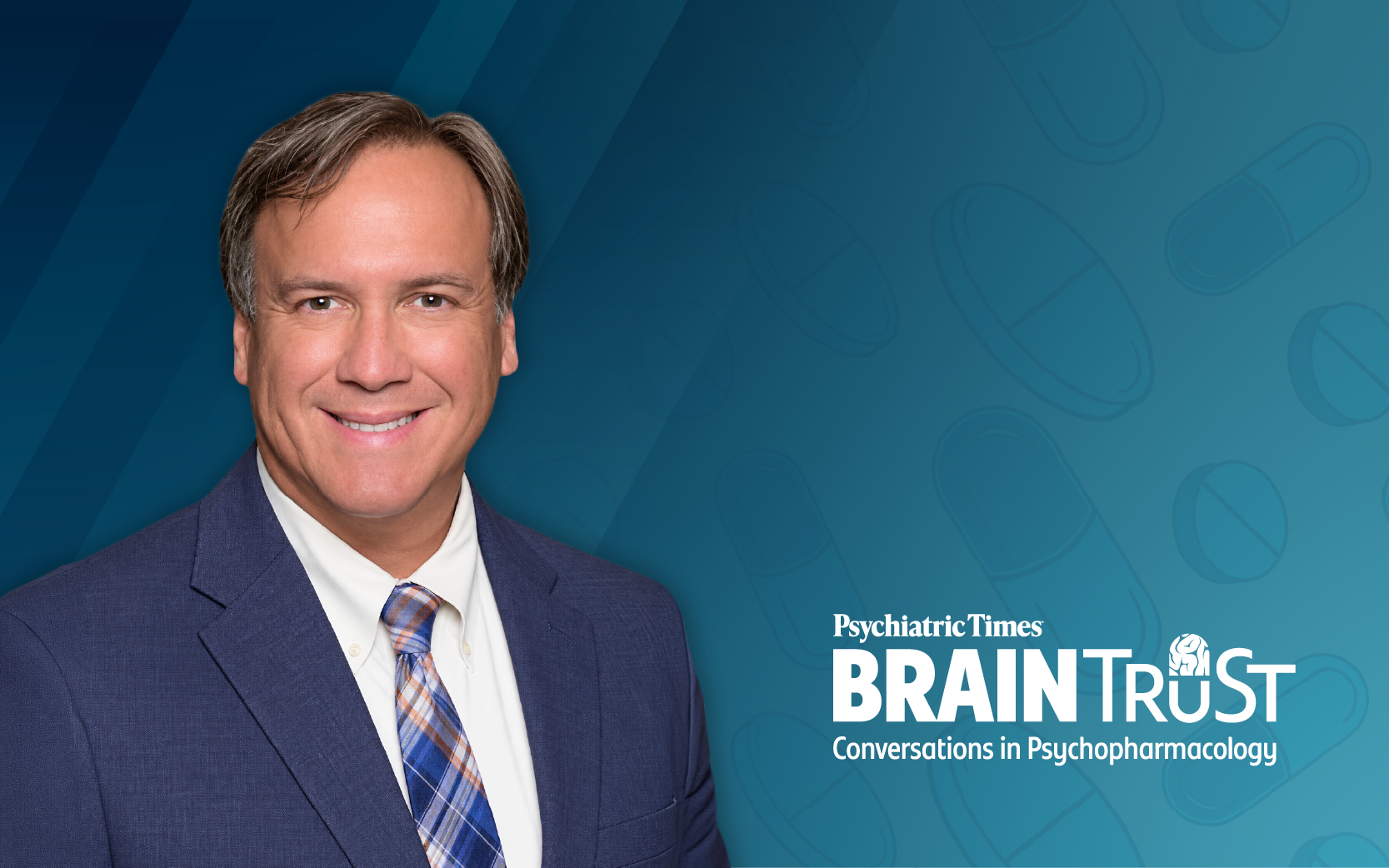
Brain Trust: Addiction Pharmacotherapy in Bipolar Disorder, Rethinking Comorbidity With Michael J. Ostacher, MD, MPH
Explore how to manage mood and substance use disorders together, boost engagement, and expand addiction medications.
BRAIN TRUST: CONVERSATIONS IN PSYCHOPHARMACOLOGY
Series Editor Joseph F. Goldberg, MD
Joseph F. Goldberg, MD, in this installment of "Brain Trust: Conversations in Psychopharmacology," sat down with Michael Ostacher, MD, MPH, to discuss managing co-occurring mood and substance use disorders (SUDs), including patient engagement, the "self-medication" narrative, and underuse of evidence-based addiction pharmacotherapy.
Ostacher traced his approach to mentor Ken Minkoff, who argued against a separate addiction specialty because all clinicians treat patients with addictions. Ostacher said a directive stance with patients who use substances rarely helped, since most already recognized the problem, as opposed to something like sleep hygiene counseling, where direct instruction worked well.
On whether mood symptoms or substance use came first, Ostacher said the distinction mattered less than commonly assumed, since most patients presented with continuing symptoms of both. Patients who invoked self-medication were often "precontemplative" about change, he said. Counterintuitively, in studies including STEP-BD, "the people who have substance use disorders are much more likely to get better and to get better more quickly than the people who don't have a substance use disorder and bipolar disorder," likely because motivated patients reduced use upon seeking treatment.1
Ostacher did not recommend avoiding addiction pharmacotherapy for bipolar patients pending disorder-specific trials. He supported varenicline and nicotine replacement for smoking cessation, methadone or buprenorphine (including long-acting injectables) for opioid use disorder, and naltrexone or acamprosate for alcohol use disorder, noting these worked regardless of psychiatric comorbidity. He cited a Stanford study in which only about 2% of patients with alcohol use disorder were discharged on an indicated medication, and a STEP-BD finding that only 4.4% of eligible bipolar patients received SUD pharmacotherapy.2 Ostacher said, "if you have a patient who has an alcohol use disorder diagnosis, you should offer them medications for treatment. They're welcome to not take them, but you should offer them for treatment." He added that GLP-1 agonists are being studied for alcohol use disorder.3
Goldberg closed by underscoring that, rather than waiting to start treatment for one condition pending resolution of the other, clinicians must address both simultaneously.
Dr Goldberg is a clinical professor of psychiatry at The Icahn School of Medicine at Mount Sinai in New York, NY and the immediate-past president of the American Society of Clinical Psychopharmacology.
Dr Ostacher is professor of psychiatry and behavioral sciences, as well as site director for addiction medicine fellowship at the VA Palo Alto Health Care System.
References
1. Gold AK, Peters AT, Otto MW, et al.
2. Allaudeen N, Akwe J, Arundel C, et al.
3. Klause MK, Justesen SK, Pedersen JN, et al.
Related to this article