
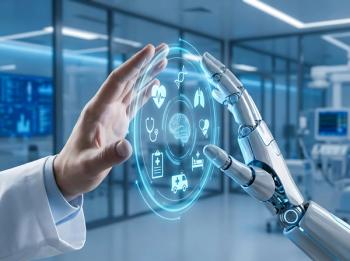
There is a question older than medicine, and perhaps older than philosophy, that psychiatry has largely avoided: What makes us human?
Explore how chatbot brains diverge and compete with human brains.
"Biomimicry" is the use of nature as inspiration for technological invention. The concept is old as Leonardo inventing flying machines in the Renaissance, but the term is new—coined just 30 years ago as title to a remarkably influential book by Janine Benyus.1 It makes sense that 4 billion years of natural selection would arrive at all sorts of brilliant engineering solutions to evolutionary challenges.
Copying nature has been a valuable way of improving human technology, and biomimicry is now ubiquitous. The shape of airplanes, hang-gliders, and windmills were influenced by bird wings. High performance swimsuits mimic shark skin. Velcro mimics how the tiny hooks of plant burrs attach to mammal fur. Down jackets mimic the insulation provided by duck feathers.
Reproducing the human brain, however, may be the most audacious of all possible biomimicry projects. The possibility was first suggested by Descartes 400 years ago; the project’s feasibility was confirmed by the first programmer, Ada Lovelace, 200 years ago. The design was first suggested by Frank Rosenblatt 70 years ago, and the first working neural networks were achieved 35 years ago. The paper that led to contemporary chatbots was published 8 years ago, and ChatGPT is less than 4 years old.2,3
Before chatbots, the human brain was the uncontested most complex machine in the known universe. Now, artificial intelligence is in a mad race to catch and surpass the human intelligence that is its model, creator, and competitor. We can learn a great deal about both human brains and chatbot brains by comparing their hardware, software, and training.
Human brain: The wonder of our brains is not its occasional malfunction, but rather that its astounding complexity functions at all. Over 86 billion neurons are each connected to thousands of other neurons via several hundred trillion synapses bridged by more than one hundred neurotransmitters. Neurons find their proper place and make the right connections through a remarkably complicated migratory choreography governed by local chemotaxis. Evolution has always had to work with the tools at hand—however, unsuitable they might seem. Human brains are effective, even though carbon-based protoplasm is an inefficient transmitter of electrons. And bulky human brains are much less efficiently packed than the neuron-dense, miniaturized bird brains, for example, which achieve much more cognitive power per gram.
Chatbot brains: As the name would suggest, an artificial neural network is a form of machine learning architecture that operates as a synthetic twin to its organic counterpart. At its core, a neural network consists of layers of interconnected nodes, or neurons, where each connection carries an associated weight and each neuron includes a bias.4 Information is fed into the input layer, and each neuron computes a weighted sum of its inputs, adds a bias, and then applies a nonlinear activation function to produce its output. This output is then passed forward through subsequent layers, where the process is repeated: each neuron aggregates weighted inputs from the previous layer, transforms them via an activation function, and propagates the result onward. In artificial networks, weights determine the strength and influence of signals between neurons, enabling flexible and precise function approximation rather than the binary firing behavior of biological neurons
Neural networks do not simply operate in the forward direction. During training, the efficacy of the network’s predictions is compared to their true values, represented mathematically in a loss function. The error is then propagated backward through the network using a calculus-based optimization process known as backpropagation, which informs the network how each weight needs to be adjusted to optimize performance and minimize error. Put simply, backpropagation allows the network to iteratively update its weights and improve its performance with each at-bat.
Organic and artificial neural networks share a common high-level philosophy: information is processed through interconnected units that adapt based on feedback. However, when these respective systems are taken to their most complex forms, a vast gap in efficiency becomes evident. The average human brain operates on about 20 watts, which is comparable to the power used by a dim lightbulb. Birds, such as crows, exhibit complex problem-solving, memory, and tool use despite only having about 2 billion neurons (1/43 of the human brain), showing that biological intelligence is not a matter of raw power but efficiency of information processing and tissue organization. In contrast, the large language models of today require thousands of watts, relying on dense, brute-force computation, often involving activation of large portions of the network for every input. Despite the magnitude of difference in energy demand between organic and artificial intelligence, the biological brain is capable of a much wider range of tasks. This adaptability emerges from the energy-efficient, densely packed, and sparsely activated systems found in the brain. Although modern artificial intelligence systems can convincingly mimic biological intelligence, their fundamentally different computational structure and substantially higher energy demands underscore a critical distinction—and potential drawback—from biological intelligence.
Chatbot brain: Unlike the human brain, the software of an artificial intelligence system is divided from its hardware. This distinction allows for the underlying computation of these systems to be optimized externally, without changing the model itself. Specialized hardware, such as graphic processing units, tensor processing units, and large-scale data centers, enables improved model performance by providing more raw power to AI’s brute-force approach. This flexibility enables rapid scaling and performance improvements without requiring fundamental changes to the model’s superstructure. This division between the “mind” and “body” of artificial intelligence provides a shortcut to product improvement, at the cost of immense energy and resource input. As artificial intelligence becomes a competitive consumer-oriented industry, and as software improvement grows more difficult, it is unsurprising that this hardware-driven shortcut has created an appetite for improved data centers and hardware innovation that is impossible to satiate.
Human brain: The human brain does not have separates hardware and software—it continually programs itself in interaction with its environment. We understand a great deal about the workings the human brain. But we understand almost nothing about what goes on within the black box. How does the brain translate complex electron transmission into ultra-complex "emergent" properties like thoughts, feelings, behaviors, and consciousness? How much do our brains resemble chatbot brains—rapidly and simultaneously doing billions of sophisticated calculations and somehow transforming into awareness, meaning, and behavior. Understanding the chatbot machine we created in our own image has become the road toward understanding ourselves.
The basic model for human learning is found in neural plasticity. Experience physiologically alters the synapses in our brain, creating strong networks that allow us to anticipate, remember, and reason. For plasticity to occur, neurons must fire in a particular order within a particular time frame. This spike-timing dependency allows our brains to physiologically encode the causality of our previous experiences, bolstering causal neuron pairs and mitigating counterproductive connections. This learning is done continuously and is indissolubly tied to the hardware of the biological brain.
Chatbot brains: In contrast, artificial intelligence systems do not learn through lived experience but through large datasets. These systems require large sample sizes to accurately learn trends during training, which usually does not occur in real-time. Rather than using active plasticity like that of the organic brain, neural networks are optimized using backpropagation in training phases that are separate from their functional operation, updating the weights globally rather than on an individual synapse basis. The simultaneous cause and effect of this difference develops a knowledge basis that is statistical rather than experiential. These intelligences rely on the information from many sources rather than anecdotal evidence. Furthermore, the separation of software from hardware allows for models to be retrained easily. While humans are defined by our past experiences, a model’s intelligence can be wiped clean and retrained in favor of a more optimal version in a few lines of code.
Chatbot brains are closely modeled on human brains, but have both great advantages and disadvantages compared to ours. Evolution used wit and elegance to develop energy-efficient, adaptable intelligence; humans compensated by using immense energy, data, and resources to create a functionally similar but mechanically different product. Energy efficiency of the biological brain has provided advantage when the comparison between us and our artificial counterparts is limited to input ranges of the same scale. However, this is a limit that recent events show does not exist. Artificial intelligence systems are a flame that continues to grow hotter the more it is fed. So long as there is input to be invested into hardware, data, and energy, the more the model can improve, granting it a window beyond the barrier of performance that the human brain, bound by its tissue, cannot surpass.
Chatbot brains have evolved faster in the past 8 years than human brains did in the previous 300,000. Chatbot brains will continue rapid evolution via miniaturization, improved programming, and refined training. Human brains are stuck and may become even less efficient as we are deskilled with increasing dependence on chatbots.
Dr Frances is professor and chair emeritus in the department of psychiatry at Duke University.
Mr Frances is an undergraduate physics student at UCLA.
References
1. Benyus J. Biomimicry: Innovation Inspired by Nature. William Morrow and Company; 1997.
2. Radford A, Narasimhan K, Salimans T, et al.
3. Levy S. 8 Google employees invented modern AI. Here’s the inside story. Wired. March 20, 2024. Accessed May 4, 2026.
4. Kufel J, Bargieł-Łączek K, Kocot S, et al.