News|Articles|November 10, 2026

New National Guidance for Managing Medetomidine Intoxication and Withdrawal

Author(s)Leah Kuntz

The American Society of Addiction Medicine has released the first clinical guide and national resource for managing the intoxication and withdrawal of medetomidine.

The American Society of Addiction Medicine (ASAM) today released the first clinical guide and national resource for managing the intoxication and withdrawal of medetomidine, outlining current clinical considerations for treating patients exposed to this substance. Medetomidine, a veterinary sedative, is an emerging adulterant in the unregulated opioid supply linked to unique and severe symptoms.

Medetomidine intoxication is associated with bradycardia and persistent sedation. Withdrawal can develop rapidly and cause severe symptoms including extreme tachycardia and elevated blood pressure that are not responsive to typical medications used to manage withdrawal from other substances. Because symptoms can be life-threatening, patients presenting to the hospital with severe medetomidine withdrawal may need escalation to critical care more often than those experiencing opioid withdrawal without the adulterant.

“The unpredictable illicit drug supply continues to pose a significant health risk to people and communities across America,” said Stephen M. Taylor, MD, MPH, DFAPA, DFASAM, the president of ASAM. “Medetomidine withdrawal can be debilitating and life-threatening, forcing addiction treatment professionals on the front lines of this crisis to innovate and adjust their practices. As medetomidine continues to spread across the country, it is critical that emergency medicine and addiction care teams understand how to properly identify and treat patients exposed to this adulterant."

ASAM Recommendations

Here are some of the key recommendations coming out of the ASAM guidance:

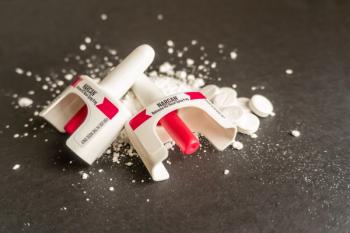
  1. As patients are commonly exposed to both medetomidine and fentanyl, giving naloxone during a suspected overdose remains essential. ASAM recommends administering naloxone in incremental doses only until breathing is adequately restored. However, naloxone does not reverse medetomidine’s effects, so patients may remain sedated.
  2. To treat medetomidine withdrawal, ASAM recommends using alpha-2 agonist medications. Severe cases may require far higher doses than usual. Intravenous dexmedetomidine may be appropriate for symptoms such as severe tachycardia or hypertension; again, higher doses than usual may be necessary.
    1. “Medetomidine withdrawal demands a more intensive clinical response than typical opioid withdrawal. The course of withdrawal is often unpredictable and can quickly escalate from mild to severe. This new clinical challenge calls for updated treatment approaches to keep patients safe,” said Jeanmarie Perrone, MD, FASAM, a Philadelphia-based physician and coauthor of the guidance.
  3. As there is no system-wide medetomidine testing, care can become complicated. In the absence of rapid point-of-care testing, clinicians should use reporting from public health departments and regional surveillance units to understand the local drug supply.
    1. “Toxicology screens do not include medetomidine, and the results of advanced testing methods are not available to inform point-of-care decision-making,” said Michael Lynch, MD, FASAM, a Pittsburgh-based physician and coauthor of the guidance. “That is why the guidance clearly explains the symptoms of medetomidine withdrawal to allow clinical diagnosis and underscores the importance of regularly monitoring the local drug supply. Severe withdrawal is more likely in regions with high prevalence and concentrations of medetomidine.”
  4. As to treatment settings, moderate to severe cases often require more intensive settings, including hospitals and potentially intensive care units. For mild withdrawal, patients may benefit from nurse monitoring in medically managed intensive outpatient and ASAM Criteria Level 3.7 Medically Managed residential programs. Patients whose withdrawal has stabilized in the hospital could transfer to an ASAM Criteria Level 3.7 Medically Managed Residential treatment program, where they provide ongoing medication management, vital sign monitoring, and daily assessments by a medical professional. The guidance noted it is essential for Medicare, Medicaid, and other payers to cover this level of care due to its crucial role in addressing medetomidine withdrawal and other intensive care needs.
    1. “Addressing the immediate crisis of life-threatening medetomidine withdrawal is just the first step," said Bridget Durkin, MD, a Philadelphia-based physician and coauthor of the guidance. "Medically managed residential facilities play a crucial role in providing follow-up care and support services for post-acute withdrawal and cravings, as well as underlying substance use disorders. Community-based Addiction Medicine providers must also be prepared to manage post-acute medetomidine withdrawal, in addition to opioid use disorder. Medications for opioid use disorder remain a key treatment, even in the setting of this novel adulterant."

History of Medetomidine

Medetomidine was first detected in the unregulated opioid supply in 2021. By December 2025, it had been detected nationwide, with the highest prevalence in the Northeast and Midwest. In some mid-Atlantic regions, adulteration is as high as 90%.2

Medetomidine, acts as an imidazoline and α2-adrenergic receptor agonist, has a uniquely severe withdrawal syndrome.

References

1. ASAM Clinical Considerations: Medetomidine Intoxication and Withdrawal. ASAM. November 10, 2026. Accessed November 10, 2026. https://www.asam.org/quality-care/clinical-recommendations/medetomidine

2. Medetomidine in the U.S. illegal fentanyl supply increasing risk for overdose and severe withdrawal syndrome. April 2, 2026. Accessed November 10, 2026. https://www.cdc.gov/han/php/notices/han00527.html

Related to this article