





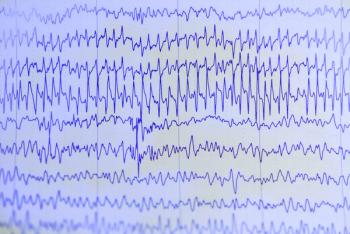
Affected patients with intractable epilepsy are treated, often for years, with antiepileptic drugs and other interventions that can promote further morbidity.

Affected patients with intractable epilepsy are treated, often for years, with antiepileptic drugs and other interventions that can promote further morbidity.
Attempts have been made to integrate psychiatry and medicine as far back as Benjamin Rush, a physician and signer of the Declaration of Independence. Recent advances in research, clinical practice and organizational makeup, however, now make integration seem more plausible than ever. Find out what's happening to bring these two fields closer together.
The relationship between depression and epilepsy is bidirectional as not only are patients with epilepsy at higher risk of developing depression but patients with depression have a three- to sevenfold higher risk of developing epilepsy. Several studies have found that the presence of depression in patients with intractable epilepsy was a stronger predictor of poor quality of life than the frequency and severity of seizures. The principles of managing depression in epilepsy are reviewed in this article.
Headache is a frequent somatic complaint in childhood and adolescence, and its prevalence has increased over the last few decades. The presence of a comorbid psychiatric disorder tends to worsen the course of headache by increasing attack frequency and severity, making the headaches less responsive to treatment, and increasing the risk of chronification. Identification and treatment of comorbid psychiatric conditions is, therefore, important for the proper management of headache, especially in children and adolescents.
While the symptoms of somatoform and dissociative disorders are influenced by the patient's culture, these syndromes are heterogeneous and may have overlapping features. Although more frequently reported in non-Western cultures and thought of as exotic and culture-bound, multiple personality disorder may be a North American example of one such disorder.
How does the role of culture affect disease presentation? The author reviews the impact of religion, ideology and upbringing on the epidemiology of OCD in Egypt.
There is a long tradition in psychiatry, reaching at least back to World War I, of studying the response of people who are faced with traumatic circumstances and devising ways to restore them to psychological health. The main focus of this work has been on the ways in which traumatic events are precursors to psychological and physical problems.
Decades of labor have been poured into the formulation of the DSM and its descendants. Is this system of classification still useful and relevant to clinical practice? Should psychiatrists continue to revise it or get rid of it altogether?
The patient who presents with vague psychiatric somatic complaints may, in fact, be suffering from chemical sensitivities. Such sensitivities are tied to lower incidences of certain psychiatric disorders while correlating with the higher prevalence of others. Neurogenic inflammation, limbic kindling and psychiatric co-factors are discussed.
The 89-year-old woman had undergone hip replacement surgery two days before, had tubes in her arms and couldn't walk. But she blithely announced to her daughter that she was leaving the hospital immediately and started to get out of bed. Astounded, the daughter sought out her mother's physician and asked, "What's going on?"
Once the distortions are cleared away, most patients who come to the emergency room tell stories that seem to grow out of the problems they claim to have and the pain they claim to feel.
The most common psychiatric sequelae following trauma include major depressive disorder, somatoform pain disorder, adjustment disorder and posttraumatic stress disorder (PTSD). In law, trauma that precipitates PTSD is viewed as a tort, which stems from the root word "torquere" (to twist), as does the word torture. In a sense, plaintiffs do allege torture in personal injury cases. A tort constitutes a civil or private wrong, as opposed to a criminal wrong, and rests on the general principle that every act of a person causing damage to a legally protected interest of another obliges that person, if at fault, to repair the damage (Slovenko, 1973).
Dissociative identity disorder (DID), known as multiple personality disorder until renamed in the DSM-IV (American Psychiatric Association, 1994), is a controversial diagnosis.
This is the fourth in a series of five articles regarding obsessive-compulsive spectrum disorders. The first three articles ran in the March 1997, June 1997 and January 1998 issues of Psychiatric Times. The first article gave an overview of spectrum disorders, the second discussed obsessive-compulsive disorder and the third examined body dysmorphic disorder.