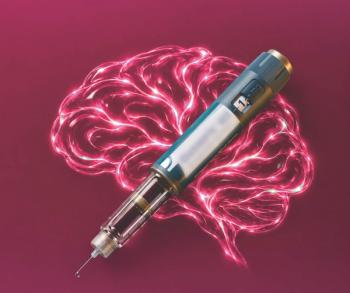
Alkermes launches a phase 2 trial of oral orexin-2 agonist ALKS 7290 to boost antidepressant response in major depressive disorder, assessing safety and symptom relief.
How can AI be useful for modeling in diagnosis and clinical trials?
Joseph Geraci, PhD, MS, said that machine learning methods built by engineers and academics for conventional datasets often could not handle the small sample sizes, heterogeneity, and variable clinical questions of patient populations. Major depression comprised distinct subtypes, including anhedonia-predominant and inflammatory presentations, that differed in severity and affected placebo response. Consequently, models that treated all patients equally failed to predict antidepressant response. Geraci stated that “if you try to build a model on everybody and treating every person equally in the model, it’s just not going to work because there’s different types of major depression.”
The Canadian Biomarker Integration Network in Depression program sought to develop models that clinicians and scientists could use to predict whether a patient would respond to escitalopram, which worked for some patients and not others.¹ Allowing models to indicate uncertainty meant that they could not answer the question for most patients, but for a small subset, the evidence was strong and replicated. Geraci noted that, after appropriate diligence and replication, such models could inform up-front decisions about whether to start a teenager or adult on escitalopram, balancing the risk inherent in treatment.
Geraci analyzed data from multiple modalities, including clinical scales and MRI, and linked specific scale profiles to specific activated brain regions. One group of patients was explained with genetic data, while another group was explained with clinical scales. Patients left unexplained by one variable type were explained by another, and combining modalities explained more patients than any single modality did.² Geraci stated that “the way to imagine this is that it’s like building a mosaic of explanation around different mixes of different types of variables.” Models restricted to 1 variable type were therefore limited, a reflection of the heterogeneity of major depression and schizophrenia. Machine learning methods driven solely by an objective function overfit in patient populations, which do not resemble typical datasets, according to Geraci. A model’s ability to indicate uncertainty represented intelligence and could point toward new discoveries.
Dr Geraci is the chief technology officer, chief science officer, and founder of Netramark.
References
1. Lam RW, Milev R, Rotzinger S, et al.
2. Sajjadian M, Uher R, Ho K, et al.