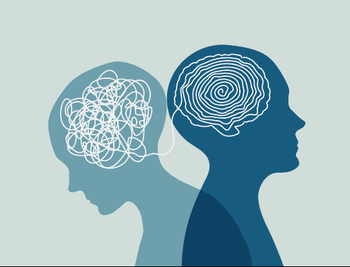
A remitted patient with ARFID faces panic after a crash, showing why recovery includes somatic fear, not just eating behavior.
Discover engaging holiday reads that blend entertainment with profound insights, featuring classics and modern works that explore the human psyche.
Tis the season to unwind! Time to close the laptop, toss aside the statistic-laden journal articles, dispense the well-thumbed DSM, and look for some lighter reading to engage the mind more pleasurably over the holiday season.
Here are some suggestions, admittedly subjective but all entertaining and engaging with something to offer.
Anything by the greatest modernist writer of the 20th century can be intimidating to new readers, but these 2 examples demonstrate his mastery. The Dead is the closing story (actually a novella) of his collection of stories, Dubliners, andis a superb demonstration of how forgotten incidents in a past life can come back to haunt us. It climaxes in the closing 3 paragraphssurely among the greatest ever endings to a story.
Ulysses will always take a while to process but for the beginner the “Circe” chapter is an enthralling start. It is based on the section of the Odessey where the sorceress Circe transforms men into pigs. The chapter reads like a theatrical script, and we see every aspect of psychotic behaviour, including identity confusion, disorientation, grandiosity and gender changing. Amidst the panoply of weird characters who come and go is mistress Bella Cohen, a truly Rabelaisian entity, who wants to send her son to Oxford. Leopold Bloom, in typical fashion, stumbles through it, ending up with a frightening vision of his dead son Rudy. An exhilarating read for any psychiatrist who wants to see how a master writer would portray such experiences.
Franz Stangl was a police officer in Austria before he joined the T4 euthanasia program and then ran the Sobibor and Treblinca extermination camps, responsible for at least a million deaths. Using the Nazi ratline, he ended up in Brazil, working under his own name for years before the German government was reluctantly prodded into extraditing him and he was sentenced to life imprisonment.
Gitta Sereny, who has form in investigating Holocaust crimes and brought Albert Speer to as close as anyone to admitting his knowledge of the death camps, had a series of interviews with Stangl in jail. While deliberately written in an unsensational way, step-by-step she leads Stangl to face the horrific nature of his crimes. After finally admitting his guilt, he dies of a heart attack. This may be a rare example of a genocidal monster being brought to face his crimes.
Waugh was the finest prose writer of his day. By 1957, poor health and drug use (chloral, bromides and amphetamines well-diluted with alcohol) were catching up with him. To overcome the problems, Waugh took a sea trip to Ceylon, having obtained a fresh supply of bromide from his doctor.
The events that followed were described in his short novella The Ordeal of Gilbert Pinfold, his most autobiographical work. The Pinfold character develops a full-blown psychosis with paranoid delusions, hallucinations, and thought insertion. Tormented to his limits, he leaves the ship after 3 days and, after going from Cairo to Ceylon, returns home.
His doctor confirms that he has a simple case of bromide poisoning, a diagnosis confirmed by a psychiatrist and physician. Waugh, dissatisfied with the material assessment, sees it instead as a spiritual challenge to his faith which he had overcome. The evidence shows that Waugh did not change his ways, continuing to use bromide, chloral, paraldehyde, barbiturates, and alcohol. This is a superb description of a drug-induced psychosis that even manages to include some amusing parts.
PG Wodehouse must rate as the finest comic writer of the 20th century and the hapless Bertie Wooster, ever accompanied by the suave Jeeves, is his finest character. It features psychiatrist Sir Roderick Glossop, father of the lovely but mad Honoria, convinced that Bertie is incurably insane. It is said that Glossop was based on the charismatic (and dangerous) William Sargant but, no matter, the book will always leave you laughing as well as admiring Wodehouse’s use of language.
GASCOYNE (always written in upper case), the protagonist, is a wheeler-dealer who owns gas stations, supermarkets, real estate, housing estates, banks, and a secret zoological warfare research facility.
GASCOYNE eats, sleeps, and does business in his car, leaving it only when he must. He spends his time zooming along the highways and freeways of a large Southern Californian city bearing a remarkable resemblance to Los Angeles.
GASCOYNE drives a 12-year-old Nash on the verge of breaking down but, no worries, he has a whole lot full of used cars he can draw on. Driving, for most people, is the perfect expression of the human-machine interaction and Crawford, as few writers do, understands the interaction between driver and car, that multisignal fronto-parieto-occipital synchronicity that connects the eyes, the feet, the hands, the pedals, the wheel and the tires in a perfect concatenation of motion.
GASCOYNE is trying to find a murderer, but his empire is unravelling. Crawford does chaos beautifully but, best of all, it is side-splittingly funny. If the ending is inevitable, Gascoyne is undeterred and soon finds a desert location to set up his new operation.
Go to any metropolis and look at the crowded freeways, jampacked with citizens and their kids, phones rammed on their ears, every turnoff feeding the vehicles to supermarkets, service stations, burger joints and video stores to milk them of their money. I have seen the future and it works, depending on how you look at it. Whatever the virtues of the car, phone, and drive-in world that most of us inhabit, half a century ago Stanley Crawford nailed it like no other. And above the petrol, cement, tarmac and rubber nightmare, there is GASCOYNE , always cruising, ever connected, never stopping—the perfect 21st century success story.
Read this book, be amazed at its prescience but, mostly, laugh your head off and keep laughing.
Anything written by Dostoevsky should be approached with trepidation but, compared to The Brothers Karamazov or Crime and Punishment, this is a pushover (and even easier as an audiobook). Prince Myshkin, impoverished minor aristocrat, is a simple character, positively shining in his moral purity and surrounded by a dubious bunch of characters with their own agendas, but failing to corrupt him. Well described are the ecstatic nature of his seizures, something the author would have known all too well from his own ictal experiences. Not for nothing do so many leading prophetic figures have similar experiences. Make this your Dostoevsky book to impress friends.
This book arose from a misconception. The author had a psychotic episode caused by antiNMDA receptor encephalitis, found in less that 5% of cases and barely known to most psychiatrists. Being diagnosed and treated by a neurologist did not leave her with great affection for psychiatrists. Having written a book about her psychotic experience, she set out to deify the man who had such an influence on DSM-III, namely David Rosenhan with his famous paper “On Being Sane in Insane Places.” Karl Popper’s rule of unpredicted consequences kicked in, and she discovered that it was a total fraud, described by Andrew Scull as the scientific fraud of the 20th century. Now it is clear why Rosenhan did not write the book that was commissioned and took a lower profile than expected. Interestingly, one who was unconvinced from the start was no less that Robert Spitzer who went on to play such a leading role in DSM-III. All credit to Cahalan for not backtracking on a discovery that no one expected. The damage by Rosenhan had been done but it is still quoted in psychology and social work courses, so it is important to learn the truth of his appalling misconception.
Wars, instability, insurrection, dictators... these are depressing times. But it has happened before. It was the 1930s that led us into the horrors of the Second World War and there is no better way to see how this unfolded than Piers’ masterpiece. From the Depression until the invasion of Poland he systematically covers the issues and the characters that emerged. No one should forget that it was the fall of the great empires in World War I that allowed obscure marginal individuals like Hitler and Stalin to emerge. Piers writes with much style and there is much in this work to make one look at our current circumstances and see what lies ahead.
The author is a semiologist (the study of signs and their meanings), something that usually makes the empirically-minded run for the hills. However, while he still engages in these activities, he has given us a book that runs centuries ahead to the world’s greatest detective, Sherlock Holmes.
It is set in 1327 at a Benedictine abbey in Italy where a series of deaths occur in a tense setting of dogma dispute. William of Baskerville, a friar with question marks over his reputation for insisting on the importance of reason, accompanied by his novice Adso of Melk, is sent to investigate. What follows is not just a superb murder mystery that could challenge Conan Doyle, Simenon, or Christie, but a discussion of how dogma can warp, distort, or even kill.
Between 1881 and 1914 occurred the second greatest transmigration of people in history, namely the escape of 2.5 million Jews from persecution in Eastern Europe to the New World. Fault lines inevitably occurred and the coercion of young Jewish women into prostitution by criminal gangs was a prominent problem. Here Joe Silver—one of his many aliases—strode the Atlantic zone like few others. Silver and his gangs were a prelude to the mafia, using cheap steamship travel and coded telegraph messages. He turned his hand to theft, prison was an occupational hazard, and informing the police when convenient also helped.
What made Silver different was not just his violence, but extreme misogyny, capacity for deception, and brutal manipulation. At the end of his life, riddled with syphilis, he went back home to Poland, was captured by the Austrians, and executed just before the war ended. And, to add a frisson, the author makes an interesting case that he could have been Jack the Ripper.
A riveting read by any standards that tells us much about the Atlantic world at the turn of the twentieth century. It will be difficult to find a better description of a true psychopath than Silver.
These books may not appeal to all but there is enough to provide some pleasant contemplation and distraction from everyday issues. So, happy reading!
Dr Kaplan is a forensic psychiatrist, writer, and historian.