

H. Steven Moffic, MD
Advertisement

Dr Moffic is an award-winning psychiatrist who specializes in the social, cultural, ethical, spiritual, and religious aspects of psychiatry, and since 2012 is in retirement as a private pro bono community psychiatrist. A prolific writer and speaker, he has done a weekdays column titled “Psychiatric Views on the Daily News” and a weekly video, “Psychiatry & Society,” since the COVID-19 pandemic emerged. Among his diverse and rare combination of major awards for psychiatrists, he was selected to receive the international Oskar Pfister Award for his contributions to religion, spirituality, and psychiatry at the American Psychiatric Association (APA) annual meeting in May 2026. Previously, he was chosen to receive the 2024 Abraham Halpern Humanitarian Award from the American Association for Social Psychiatry; the 2016 Administrative Psychiatrist Award from the American Psychiatric Association; in 2002, the one-time designation of being a Hero of Public Psychiatry from the Speaker of the Assembly of the APA; at the turn of the new millennium, an APA Art Association award at the annual meeting for his displayed collage “Any Point of View (of Rusti) is Pure Delight”; and in 1991 the Exemplary Psychiatrist Award from the National Alliance for the Mentally Ill. He also presented the third Rabbi Jeffrey B. Stiffman lecture at Congregation Shaare Emeth in St. Louis on Sunday, May 19, 2024. He has been an advocate and activist for mental health issues related to climate instability, physical burnout, and xenophobia, among other social justice causes, serving on many related local and national community and professional Boards. He has edited the requested 5-volume series on religions and psychiatry for Springer: Islamophobia, anti-Semitism, Christianity, The Eastern Religions and Spirituality, and in 2026, the Second Edition of Islamophobia and Psychiatry. He serves on the Editorial Board of Psychiatric Times.
Articles by H. Steven Moffic, MD

What do politics, the 2024 Olympic Games, and psychiatry have in common?


What effect does nature have on mental health?

Mental health clinicians have the privilege to often be trusted with the darkest secrets of patients, but with the accompanying challenge to maintain their own well-being.

“Some are born great, some achieve greatness, and some have greatness thrust upon ‘em…”

When, if ever, does a psychiatric ethical principle justify being broken?

How much do we learn from nonverbal cues, like Sherlock Holmes did?

Is laughter in jeopardy online?

In the movie, "Oppenheimer," we see a glimpse of atomic fallout and the consequences of war. How does this apply to today's global events?

How does isolation for a typhoon compare with COVID-19 isolation?

What role do social psychopathologies play in the upcoming election?
It's never appropriate for people in power to use the term "crazy."

Here's what H. Steven Moffic, MD, has learned in retirement...

The mention of Hannibal Lecter may increase stigmatization of mental illness and mental health care.

What psychiatric benefits come from reunions?

How does trauma, like an assassination attempt, affect someone’s mental health?

The change in the weather indicates a potential public health emergency...

What relevance does freedom have to psychiatry?

How are current events similar to that of the 1960s?

Is managed care responsible for clinician burnout?

Need summer reading recommendations? We've got you covered.

Highland Park is an excellent example of community recovery from mass tragedies.

Should elected officials have mandated medical evaluations?

Life, liberty, and the pursuit of happiness or peace, prosperity, and the pursuit of the common good?
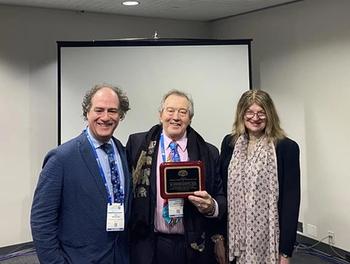
Psychiatric Times asked H. Steven Moffic, MD, to share his thoughts on humanitarianism and psychiatry.
The movie “Inside Out 2”: good for mental health explorations for individuals of all ages.

What are your thoughts on the presidential debate?

H. Steven Moffic, MD, recaps his vacation and the impact it had on his state of mind.

What questions would you ask the presidential debaters?
Advertisement
Advertisement
Advertisement
Trending on Psychiatric Times
1
Postpartum Psychosis on Trial: What the Lindsay Clancy Case Can Teach Us
2
A New Mechanism for ADHD: Raman Baweja, MD, on Centanafadine's FDA Approval
3
What's New in Psychiatric Treatment? Highlights From the 2026 Southern California Psychiatry Conference
4
This Month In Alzheimer Disease: July’s Pharmacology and Research Developments
5