
The potential of TMS as a treatment for cognitive disorders, fatigue, pain, and other manifestations of brain disease is discussed, as is the encouraging prospect for neuropsychiatric management of many patients.
The potential of TMS as a treatment for cognitive disorders, fatigue, pain, and other manifestations of brain disease is discussed, as is the encouraging prospect for neuropsychiatric management of many patients.

Selected for clinical implications, here are some highlights from the recent acceleration in understanding of the mechanisms of bipolar disorder.

Treatment approaches to GAD, a highly prevalent, chronic, debilitating, relapsing, and often underdiagnosed anxiety disorder.

Identifying comorbid anxiety disorders as potential treatment targets may contribute to more positive outcomes for patients with schizophrenia. Details here.

Available data suggest that transcranial magnetic stimulation holds promise as a treatment for GAD. Here: a look at what we know.

The authors examine anxiety in the medically ill: its presence secondary to or as an impersonator of physical illness and its diagnostic and management challenges.

The articles in this Special Report address suicidal behavior in the context of the role of sexual identity, the effects of antidepressants and lithium on suicidal behavior, and clinicians’ reactions in the aftermath of suicide.
An interesting pharmacological approach in terms of anti-suicidal strategies is the use of lithium for treatment of patients with affective disorders. Details here.
As an occupational hazard, preparing for the possibility of patient suicide will help the clinician anticipate the types of support that our colleagues or we may need to weather the event.
Ten years ago, the FDA placed a black box warning on all antidepressants because of concerns that the medications increase risk of suicidal thoughts and behavior in youths. It's time for the FDA reevaluate that decision.
This article reviews what is known and unknown about LGBT suicide risk, discusses risk and protective factors for LGBT adolescents and adults, and provides recommendations for assessing and treating LGBT patients.
The past decade has been an exciting one for the field of psychosomatic medicine. It has been recognized as a specialty and now has a certification examination. In this Special Report, we discuss some of the approaches that are being taken to special populations within the psychosomatic medicine community.
This article provides a practical framework that can guide consultation-liaison psychiatrists through solving problems of capacity and informed consent.
Although the somatizing disorders cover a vast array of symptomatic domains across many medical specialties, this article addresses the broad topic conceptually.
The need to integrate psychiatric treatment with somatic care puts psychosomatic medicine in a unique position to focus on older patients who would not otherwise seek specialized treatment.
For severely ill patients, understanding the neurobiological underpinning of assertive coping provides an additional map for rapid assessment, formulation, and intervention to bolster assertive coping.
An overview of select topics in clinical psycho-oncology, including assessment and management of delirium and brain lesions, mood and anxiety disorders, medication adverse effects, and existential death anxiety.
The role of transplant psychiatrists is to assess both transplant and donor candidates to determine capacity to consent to the surgery, recent stressors and coping skills, social supports and availability of caregivers, and whether there are psychological or substance abuse issues that would affect outcomes.
With more and more baby boomers turning 65 every day, there will be an enormous increase in elderly patients needing psychiatric care over the next 20 years.
This article summarizes 5 cases from consultation services at several teaching hospitals. These challenging cases illustrate several points for the consultation/liaison psychiatrist to consider in caring for elderly hospitalized patients.
An in-depth look into the behavioral and psychological symptoms of dementia.
DSM-5 criteria for hoarding disorder necessitate that the hoarding behaviors cause clinically significant impairment in the patient’s ability to function.
Clinicians will likely encounter increasing numbers of older adults with late-life depression. Advances in our understanding of the neurobiology can help inform diagnosis and prognosis.
What to do once treatment-resistant depression is established based on risk factors and exclusion of other conditions? Insights here-and a treatment algorithm.
Because cognitive and negative symptoms have the greatest impact on overall recovery, interdisciplinary strategies that target these symptoms are necessary. This article offers details.
The discovery that a single IV infusion of low-dose (subanesthetic) ketamine exerts rapid antidepressant effects constitutes an expansion in our understanding of the neurobiology of depression and provides new avenues for drug development.
What do you include in your differential diagnosis if you suspect Munchausen syndrome? Take the quiz and learn more.
All psychiatrists must familiarize themselves with relevant reporting statutes and be knowledgeable about what constitutes neglect or abuse.
Maltreatment at an early age casts a very long shadow. Here: a look at the long-term effects of early childhood trauma.
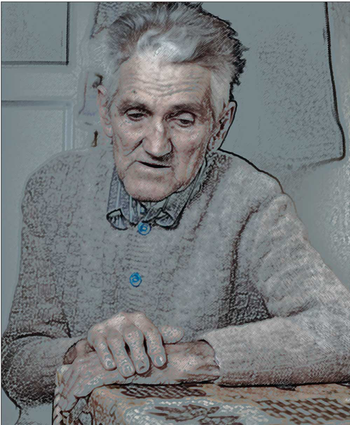
The number of persons affected by elder mistreatment and self-neglect is growing-with consequent increases in morbidity and premature mortality.