
Experts review the co-occurrence of insomnia with other medical conditions and discuss risks and triggers that lead to insomnia, such as age and psychiatric conditions.
Experts review the co-occurrence of insomnia with other medical conditions and discuss risks and triggers that lead to insomnia, such as age and psychiatric conditions.
Drs Paul Doghramji and Leslie Citrome provide an overview of the diagnosis and prevalence of insomnia.

In this custom video series, Rose Mary Xavier, PhD, MS, RN, PMHNP-BC, shares advice that can be helpful to community providers who manage children and adult patients prescribed antipsychotic therapy about screening for involuntary body movements and early signs of tardive dyskinesia.
In this custom video series, recommendations regarding patient selection and use of VMAT2 inhibitors in patients with tardive dyskinesia based on current clinical guidelines and real-world practice are shared.
In this custom video series, key opinion leaders compare VMAT2 inhibitors available for use to treat patients with tardive dyskinesia.

In this custom video series, Leslie L. Citrome, MD, MPH, and Rose Mary Xavier, PhD, MS, RN, PMHNP-BC, caution against the use of anticholinergic medications for Parkinson’s disease and comment on the use of alternative therapies for appropriate patients.
In this custom video series, experts provide insight into strategies that may be helpful to healthcare professionals who manage patients on antipsychotic therapy to best monitor for signs of tardive dyskinesia, with special considerations regarding telepsychiatry.
In this custom video series, Leslie L. Citrome, MD, MPH, and Rose Mary Xavier, PhD, MS, RN, PMHNP-BC, reference the Abnormal Involuntary Movement Scale (AIMS) rating scale, used to assess the severity of involuntary movements and help diagnose tardive dyskinesia.
In this custom video series, key opinion leaders discuss what to know about the use of antipsychotic therapy and screening for signs of tardive dyskinesia, and starting treatment with a VMAT2 inhibitor.
In this custom video series, experts share overall impressions of a female patient with bipolar 1 disorder who develops new onset movements suggesting tardive dyskinesia and the rationale for intervening with VMAT2 therapy.
In this custom video series, Leslie L. Citrome, MD, MPH, and Rose Mary Xavier, PhD, MS, RN, PMHNP-BC, review the case of a male patient with schizophrenia who develops symptoms of tardive dyskinesia and comments on the appropriateness for intervening with VMAT2 inhibitor therapy.

The first-and-only transdermal patch for adults with schizophrenia offers a new treatment.

P values tell half of the story. A result that is statistically significant may actually be clinically irrelevant. More in this video.

P values can be deceiving. In order to determine if a clinical trial result is important, we need to look at the effect size.

Schizophrenia and T2 DM risk; short-term weight gain with specific antipsychotics; interventions to reduce weight and/or metabolic abnormalities. . .answers here.

A video summarizing key points of a presentation titled “Agitation and Aggression: Managing the Acute Episode and Beyond, An Evidence-Based Approach.”
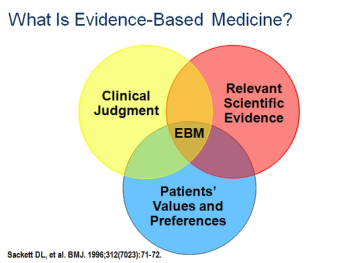
How can you apply the framework and philosophy of evidence-based medicine to the use of antipsychotic medication? Here to discuss is Leslie L. Citrome, MD, MPH.

Several studies have been undertaken to test the efficacy of drugs in the management of aggression and hostility in patients with schizophrenia and other mood disorders.
CATIE can be viewed as a switch study. Switches offer both opportunity and risk. Data from CATIE demonstrate differences in overall effectiveness, but these differences depend on the individual patient context.
Increasing variations in mechanisms of action of atypical antipsychotics, side-effect profiles, and efficacy among the atypicals enable clinicians to tailor treatments to individual response, side-effect history, and current medical conditions.