
Despite the high levels of resilience, refugee populations are vulnerable and require that the health system continues to provide care during crises.
Despite the high levels of resilience, refugee populations are vulnerable and require that the health system continues to provide care during crises.

The economic fallout of the pandemic may continue for years resulting in prolonged unemployment and an increasing percentage of the population with untreated serious mental health problems.

As we get past the surge (fingers crossed) of COVID-19, the two most striking pathologies we are seeing are a much greater volume than usual of delirium as well as persistent encephalopathy.
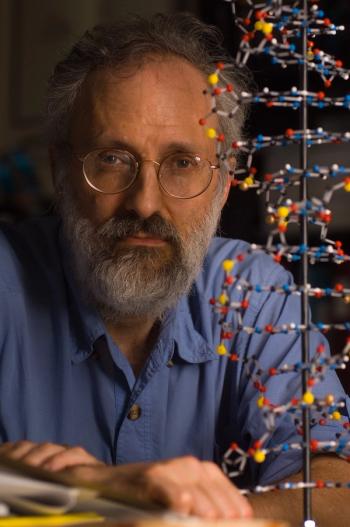
Awais Aftab, MD, interviews this highly respected psychiatrist and genetics researcher, who has been further catapulted into fame over the past two decades through his widely read philosophical commentaries.

After so many weeks of sheltering in place, watching the news, and not going to restaurants or other public places due to the pandemic, how do we re-engage and re-integrate slowly and maintain calm?

How can telepsychiatry improve quality and access to care as well as reduce physician burnout? Telepsychiatry pioneers

During this time of social isolation, people who are single may be having a difficult time. Staying home in lockdown may mean they haven't been seen or touched another person in weeks or months. A board-certified pediatrician and adult and child psychiatrist discusses these issues in this podcast.
Artificial intelligence combined with electronic health records may detect FEP a year before onset in asymptomatic adults.
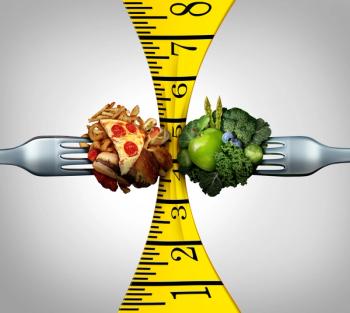
With increasing interest in pathologically healthful eating, there is considerable need for additional research and psychiatrists who can diagnose and treat orthorexia nervosa (ON).

Isolation does not mean disconnection. Our souls and spirits need to feel part of the bigger family that we are. More in this video.

Here is a sampling of contributions about telepsychiatry submitted during the pandemic, as well as on-demand information from the Psychiatric Times Webinar that took place in May, in case you missed it.

Society’s psychological reactions to a crisis can be predicted according to disaster response frameworks, which can be used to understand what to build during the evolving COVID-19 crisis, and when those innovations will prove most vital.

Beethoven’s baton, the genius "gone mad," deaf to criticism, his joy as he conducted, all the notes he trusted the orchestra to play . . .

This innovative program at Massachusetts General Hospital addresses postoperative pain while preventing relapse in patients a history of opioid use disorder.

In his 1918 essay, “Mourning and Melancholia,” Sigmund Freud examined the difference between mourning and melancholia, what we would now call major depression or depressive disorder.

Reflections on the anti-restriction protesters and hyper-individualists.

You are cordially invited to the Psychiatric Times Webinar, Telepsychiatry: Ready Your Practice for COVID and Beyond.

In honor of National Foster Care Month, this article sheds light on these issues and provides information for psychiatrists caring for this vulnerable population.

The use of technology that supports remote methods of communication, assessment, and mental health care has become more timely, and important for researchers to adopt, refine, and implement.
The mortality rate is unacceptably high in patient with serious mental illnesses. Several psychosocial interventions have been developed that may benefit these patients.

Dr Steve Moffic talks about about some of the psychological dangers clinicians are facing during the pandemic in this video.
Depression in children and adolescents is associated with several impairments but the most significant concern is the increased risk of suicide in youths with depression.

None of them are perfect, but a few rise to the top, according to recent guidelines.

How do you determine whether pain is present and its severity as well as how it responds to treatment in patients who are cognitively impaired? Some answers to these questions.

Beyond unsettling our minds, the current pandemic unsettles our souls in ways we are just beginning to understand. Just as the COVID-19 virus attacks the respiratory tract, the pandemic itself can assault the soul. Dr Pies identifies five manifestations of the crisis.

Some health care workers have been particulary vulnerable to the stress of uncertainty and loss of control engendered by the COVID-19 pandemic, illustrated by 3 cases presented here.

If we want the public to wear masks for protection from the coronavirus, not complying with self-protective measures does not model safety.
New (and not-so-new) insights on antipsychotics across a range of different measures of treatment response.

Treatment for "the scourge of psychiatry" involved malariotherapy-infecting the patient with malaria; the resulting high fevers were believed to kill off the syphilis organisms.

As we see masked faces walking alone across crowded streets, this young teen wonders if people will ever feel safe again. "Mother’s Day allows us to thank the mothers who help their children feel protected," she says.