





Detainees in state and federal prisons have committed crimes that many of us can never forgive. But how we treat such people beyond the loss of freedom and certain rights is entirely about who we are as a society. More in this commentary.
Detainees in state and federal prisons have committed crimes that many of us can never forgive. But how we treat such people beyond the loss of freedom and certain rights is entirely about who we are as a society. More in this commentary.
A guide for helping patients understand heroin, its history, and how it impacts our communities.
Amidst the anguish and heartbreak felt by the victims’ families, there are always two haunting questions: What motivates someone to kill strangers wholesale in a seemingly senseless way? And what, if anything, can we do to stop these tragedies from recurring?
If you’ve never surfed the web for sites that critically examine psychiatry, I highly recommend it-though it’s not for the faint of heart.
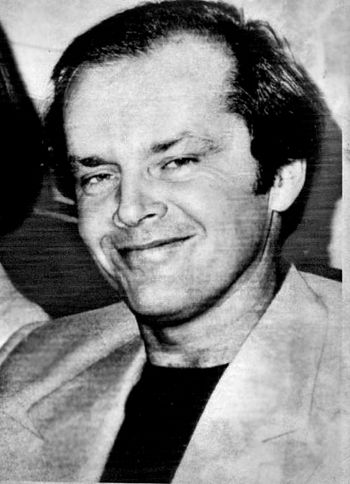
More than 50 years have passed since One Flew Over the Cuckoo’s Nest was published, and almost 40 years since the movie was released, but the issues seem as relevant today as they were back then. If you haven’t seen the film or have forgotten what you saw, see it again as soon as you can. Here's why.
When psychosocial treatments are delivered with high quality and fidelity, outcomes improve. That is the parity all of us should be fighting for. More in this commentary by NIMH Director Thomas Insel, MD.
Death penalty cases are extravagantly expensive and drain funding from programs that might actually reduce crime.
As a psychiatrist, I have spent years training to help others deal with loss and suffering. When it is your own loss, however, you realize that you are sometimes powerless to shield yourself from your pain.
In the US, 38,000 drug overdose deaths occur per year, and it is estimated that 75% are opioid-related. The good news is that addiction is a treatable disease. More in this discussion of opioid addiction, the use of naloxone, and Good Samaritan laws.
First published in August 1992 in Psychiatric Times, this psychiatrist joyfully recounts a memorable outing with his grandson.
22 Years after he wrote of a memorable beach outing with Igor, his toddler grandson, this psychiatrist looks back on their joint adventure through a life "full of adventures, full of wonders!"
Media coverage of murderous rampages comprises a grisly-and vastly profitable-reality show. I’ll call it a Slaughterfest. Why do therapists continue to take part in this offensive entertainment?
The passing of poet and humanitarian Maya Angelou, a 50th high school reunion, Memorial Day, the Tomb of the Unknown Soldier, and a eulogy to the Unknown Psychiatrist. . .
I get a strong and encouraging response whenever I write or talk about saving normals from excessive treatment. I get almost no response when I write or talk about the shameful and wasteful neglect of the severely ill. We mistreat them barbarously and almost no one seems to care.
Why do so many die as a consequence of addiction? Sadly-and in some cases disastrously-affected individuals are never offered alternative approaches after one option fails. More in this commentary.
"Depression is overwhelming and overpowering, and it crushes its prey." Here: a pediatrician tells of her 40-year battle with severe depression, and offers insights about how to talk with someone who is depressed.
The tripling of ADHD rates in the last 20 years and skyrocketing use of stimulants are sure signs of a fad. The forces promoting it are, and will continue to be, formidable. More in this commentary.

Those who have experienced extreme trauma and their descendents have taught us much about resilience, renewal, and redemption-outcomes that are all recalled in this period of the Jewish Passover, Christian Easter, and Holocaust Memorial Week.
In just 20 years, rates of ADHD have tripled and autism and childhood bipolar disorder have increased forty fold. The last thing our kids need is to be misdiagnosed with “Sluggish Cognitive Tempo” and bathed in even more stimulant meds. More in this opinion piece.
Firearms are the means of death in thousands of suicides and homicides every year. There is no denying that free access and wide availability has made gun death a major threat to our public health. More in this commentary.
It is time for psychiatry’s critics to drop the conspiratorial narrative of the “chemical imbalance” and acknowledge psychiatry’s efforts at integrating biological and psychosocial insights.
Mental health professionals can predict high-risk groups but can’t pick out who will go on a rampage. Murder is too much of a-needle in-the-haystack rare event to ever be reliably prevented with psychiatric tools. More in this commentary.
ADHD has more than tripled in just 20 years-it is now diagnosed in 11% of all kids and in an astounding 20% of teenage boys. More in this commentary.
In periodic entries in his journal, the Columbia Mall shooter acknowledged having a “general hatred toward others.” He had insight into his deteriorating condition, as he felt himself slipping away from rationality and health.
When a full-time writer's husband was diagnosed with cancer, she found writing poetry helped her cope. She guessed that others would, like her, find their experiences with cancer best expressed through poetry. So began The Cancer Poetry Project.