
Is creativity augmented or inhibited by mental illness? Insights from 4 case studies of troubled yet brilliant minds.
Is creativity augmented or inhibited by mental illness? Insights from 4 case studies of troubled yet brilliant minds.

The key to identification of prodromal psychosis may lie in community-based outreach.

First-episode psychosis cases are presented here using the RAISE study model-individual sessions, family psycho-education, social advancement in school work, and an expert psychiatrist prescriber.

Is there clinical evidence for the use of digital tools like smartphone apps for schizophrenia and other psychiatric illnesses?

Depression can be accompanied by cognitive symptoms, but the nature of the relationship between these symptom categories is multifaceted.

What are the effects on the clinician who loses a patient? How to respond?

The elephant in the room: the problem of iatrogenic opioid use disorder is being ignored.
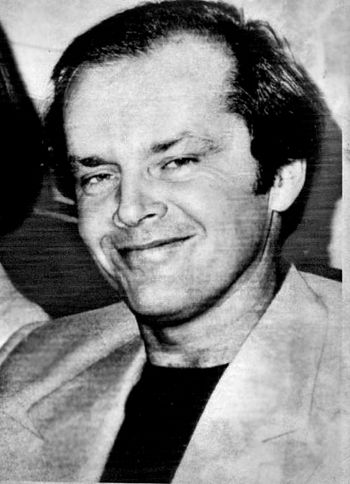
More than 50 years have passed since One Flew Over the Cuckoo’s Nest was published, and almost 40 years since the movie was released, but the issues seem as relevant today as they were back then. If you haven’t seen the film or have forgotten what you saw, see it again as soon as you can. Here's why.
How to manage EHRs is at the top of the list of physician concerns, according to past AMA President Jeremy Lazarus, MD. The first psychiatrist to lead the AMA in over 70 years, Dr Lazarus addressed the Assembly at the American Psychiatric Association Annual Meeting in New York in May.
As the use of social media becomes necessary for the online presence of medical professionals, this topic will continue to be essential for the training of both current and future psychiatrists.
Mood disorders in older adults are neither inevitable nor particularly resistant to treatment. With attention to the special needs of older patients during evaluation, treatment, and follow up, clinicians can help many patients derive greater enjoyment from their later years.
We talk about mental disorders as brain disorders, but what does that really mean? How does it change the way we think about autism, schizophrenia, depression, bipolar, and other illnesses? The answer to these questions are still evolving. More in this video exclusive with NIMH Director Thomas Insel, MD.
Vice President of the United States Joe Biden spoke at this year's American Psychiatric Association Annual Meeting in New York. Here, a video clip from his speech.
Is bipolar disorder overdiagnosed? Underdiagnosed? Neither? In this podcast, Dr S. Nassir Ghaemi offers his perspective on those questions.
The removal of the so-called “bereavement exclusion” (BE) from DSM-5 was one of the most difficult and controversial decisions the DSM-5 work groups made, and many clinicians continue to find the distinction between ordinary grief and major depression confusing.
There has been a lot of publicity about hearing loss as a predisposing factor to depression and dementia. What about visual problems? These questions and more in this expert Q&A.
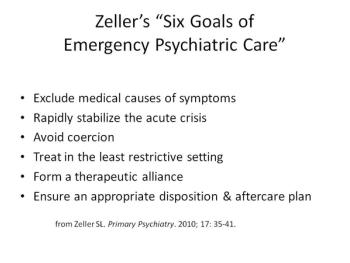
Agitation is a spectrum of symptoms . . . it can go all the way from being irritable up to pacing to lashing out to clenched fists to outright violence. Intervention via de-escalation techniques at an early stage is optimal. More in this podcast.
It seems ironic that the Oedipus myth about self-inflicted blindness is so central to psychiatry, but there are few guidelines on treating sensory loss. Here, the evolution of an APA workshop on treating patients with visual impairments.
What are the psychological and physiological effects of persistent loneliness? How prevalent in the US? What role can cognitive behavioral therapy play for persistently lonely people? In this podcast, an expert offers a brief overview of this underappreciated, but often overlooked, problem.
Presenting a Q&A with Dr Rajesh Tampi and Deena Tampi on the issue of behavioral health in accountable care.
Running into an old friend at the American Psychiatric Association Annual Meeting: Use hashtag #APAAM14.
Recognition, management, and understanding of the broad range of sexual feelings in older adults is a key component to providing humane and competent care. More in this expert Q&A.
In this podcast, Dr Eric Plakun give an overview of key points and psychodynamic principles on treatment-resistent mood disorders, based on research and clinical experience.
What differentiates this film from other Holocaust documentaries is that it documents the bonds between 4 Israeli-born siblings, recently bereaved, as much as it documents details about the fate of their father at the hands of Hitler’s henchmen.
A video featuring the author of the DSM-5 Handbook, Dr Michael First describes differential diagnosis and assessment, central components of clinical practice.
What happens when our patients get pregnant or plan to get pregnant? What if psychiatric illness manifests during pregnancy or the perinatal period? Dr Elizabeth Fitelson answers these questions and more in this video.
An expert talks briefly about interventions that can help bolster resilience and help older people recover quickly from adversity.
There’s a lot going on at the American Psychiatric Association Annual Meeting in the Big Apple this year . . . so much, in fact, that we’ve invited the Chair of Scientific Program Committee, Dr Philip R. Muskin, to provide you with a road map. More in this podcast.
While the growing evidence base for the positive effects of lithium on brain health is compelling, the evidence remains preliminary.
Surprisingly, psychiatrists and psychiatric nurses “were just as likely” as their primary care counterparts to display negative biases toward individuals with schizophrenia seeking general medical care.