










Violent intolerance seems to be on the rise, and psychiatrists must contribute more of our understanding about the origins of these problems, and to development of solutions to reverse these trends.
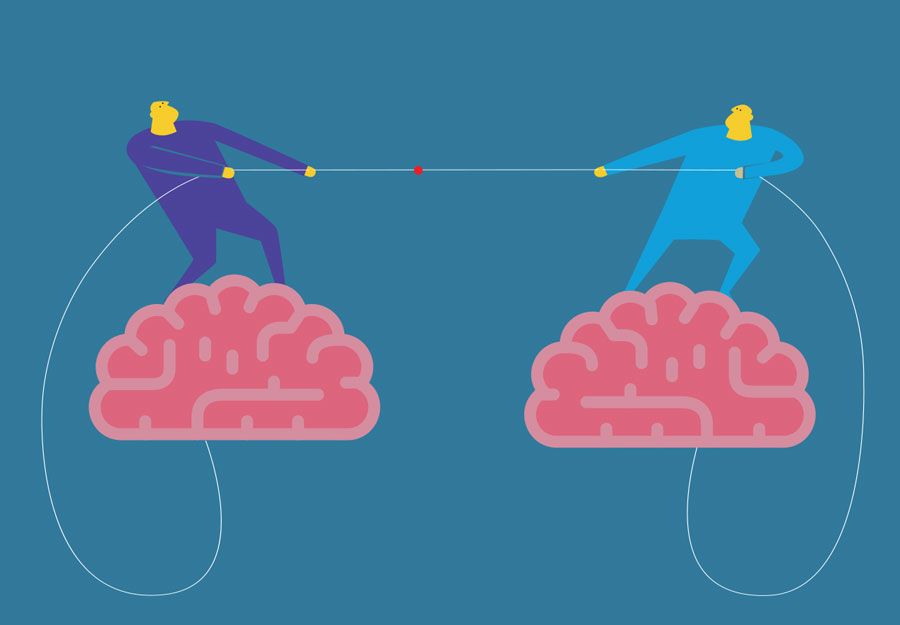
Violent intolerance seems to be on the rise, and psychiatrists must contribute more of our understanding about the origins of these problems, and to development of solutions to reverse these trends.

Is it okay for the media to show terrorist-sponsored torture videos? Are there no psychological effects of this kind of “show”?

Many years ago, the model approach to mental health treatment was the therapeutic community: "As Aristotle noted long ago, man is a social animal and only in a social unit can he experience a whole life." More in this blog.

Dr Moffic takes us around the world to celebrate the lives of psychiatrists who made important contributions to the field.

Everyone who has ever billed a third party for psychiatric care knows that lack of “medical necessity” is the catch phrase used throughout the insurance industry to deny care that the clinician who has actually evaluated the patient has determined is needed.

This article reviews what is known and unknown about LGBT suicide risk, discusses risk and protective factors for LGBT adolescents and adults, and provides recommendations for assessing and treating LGBT patients.
The Psychiatric Views on the News series for Psychiatric Times attempted to bring together societal events and psychiatry to start a conversation. Is a psychiatric view on the news important? If so, what other stories have caught your attention, and why?
When widespread fear and anxiety about the spread of an infectious disease stress our society, psychiatrists can play a variety of important roles in population health management.
Because of the widespread use of selfies by young people in social media and digital communication, it is important to examine the psychology behind the selfie as well as ways mental health professionals can talk to adolescents and their parents about these issues.
Clinically relevant information by our Section Editors, on topics such as bipolar disorder, digital media in psychiatry, ethics, history, major depressive disorder, military mental health, schizophrenia, and sleep disorders.
The funding of mental illness services in the US is more thought-disordered than any of the thought-disordered patients it is meant to serve.
I had planned to make this month’s column about the best 10 advances in psychiatry during 2014. While some things changed for the better for our patients and their families-and our profession-I’ve been having a hard time with my list.
How do we catch up with other developed countries to create a compassionate, cost-effective mental health system? Psychiatric Times posed this question to some of the leading experts in the field.
In this commentary, the author states, “We must get back to treating the whole person, not just his brain circuits. The brain is involved in all we do and what we are, but it is also itself influenced by our psychology and social context.” Care to weigh in?
This article provides a practical framework that can guide consultation-liaison psychiatrists through solving problems of capacity and informed consent.
The case for training residents to conduct evaluations of impairments in patients with chronic mental health issues.
This volume is written from an emerging edge of basic science and will reward a clinical readership.
Psychiatrists should be playing a key role in end-of-life decisions as well as, not coincidentally, in pain management.
There are probably many social, economic, and familial forces at work in generating the trend toward public incivility, and it would be silly to blame the Internet for the riot in Keene.

After years of working with troubled individuals claiming to have been abducted by extraterrestrials, Harvard University Professor John Mack published a book. What made Mack and the book so controversial was the fact that he had come to accept that his patients’ stories were an accurate description of real events.
For this psychiatrist, learning a section of the Talmud known as Megillah brought to light an important exchange that has implications in therapy and psychopharmacology, regardless of theoretical stance.
Everyone, in their own way, wants what's best for people with mental health challenges, but risks and benefits are interpreted through a personal lens.
Although 2 weeks of protected touring is hardly enough time to get a sense of Morocco, there was a familiar parallel to cross-cultural psychiatry. Let the patient tell you what they are about culturally, respect that particular point of view, relate to them as they wish, and support that with study.
What can we do to fix our broken mental health system? Psychiatric Times posed this question to some of the leading experts in the field.
Whether these psychiatrists helped or hindered societal events probably depends on one's political perspective.