

Patients rely on the companionship and kindness of nurses now more than ever, and these poem selections reflect that.
Patients rely on the companionship and kindness of nurses now more than ever, and these poem selections reflect that.

Maya Angelou’s words remind us to care for and support one another.

Dr Berlin recites sentiments close to his heart.

Is a doctor a healer, a confidante, a priest or rabbi, a turner of textbook pages, or a combination of all?
Aaron Burstein, PharmD, shares details from a scientific presentation at the Alzheimer's Association International Conference.
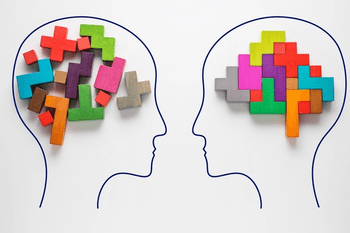
Impulsive and compulsive behaviors intersect and commonly occur within the same individuals.

We need to celebrate the strengths that only aging can confer.

Tips to tailoring treatment of mood disorders using a measured approach.

Even individuals who escaped from the burning towers needed years to recover.

In this video, Jamie Tworkowski, founder of a suicide awareness organization, shares the story of the charity's surprising start.

In light of many crises taking place today, it is important to celebrate and recognize the contribution of psychoanalytic practice to society.

As we notice acts of kindness and allow them to guide us into new behaviors and habit loops, we replace worry and anxiety with altruistic thinking.
There is more to dreaming than meets the (shut) eye.

Two examples described here underscore the importance of understanding the cytochrome P450 (CYP) system

The words are no less fitting now than when this piece was written at the height of the AIDS epidemic.
Drug mechanisms of action are evolving. An area in psychiatry that has become increasingly important clinically is discussed here.

When all else fails, fly.
The musical prodigy is believed to have had a hyperthymic temperament, but he was also vulnerable to sweeping bouts of depression and guilt. Psychiatrist and virtuoso Richard Kogan, MD, puts music to storytelling, to explain the phenomenon of genius.

We come for freedom and the chance to live the American dream.

As the pandemic lingers, managing depression can become that much more difficult. These proven steps can help patients, and you, better manage depression.

Let spring training not be a mere memory.

Andrew Cutler, MD, shares insights on the results of a Phase III trial that shows great promise in the treatment of ADHD.
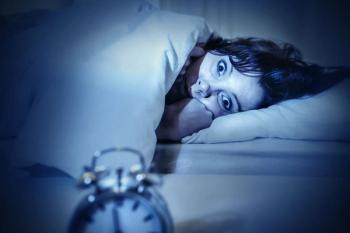
A sleep specialist highlights what to watch out for in your patients.
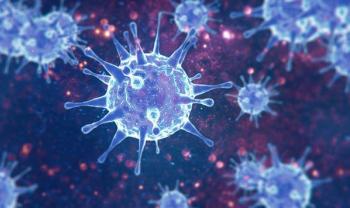
For some patients, quarantine and isolation may generate feelings of uncertainty. It is important to use accurate terminology, since the words we use and how we think shape our being and responses.

Katharine Phillips, MD, shares key insights on coping.

Although weight loss may be a favorable feature of healthful diets, "clean eating" can be taken to extremes. In this video, we interview Thomas R. Dunn, PhD, author of a recent CME for Psychiatric Times. Orthorexia Nervosa.
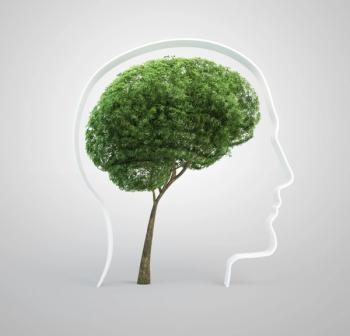
It is important that health care workers find ways of managing their anxiety and stress, which can otherwise become overwhelming. Dr Awais Aftab shares his own experience during the pandemic.

When is an adverse drug reaction actually a drug interaction? And vice versa? More in this video.

For children who feel left alone in the world after profound loss, there are ways to mitigate the harm.
More than ever, psychiatrists are encountering patients who may have never experienced mental health issues.