
The Foundation for Excellence in Mental Health Care suggests a total redesign of the mental health system from the federal level down to the local level. Three overarching themes are articulated.
The Foundation for Excellence in Mental Health Care suggests a total redesign of the mental health system from the federal level down to the local level. Three overarching themes are articulated.

A look at the 2015 joint American Society for Adolescent Psychiatry (ASAP) and International Society for Adolescent Psychiatry and Psychology (ISAPP) Scientific Meeting in March. There, the author will be presenting two sessions that address adolescent sexuality and sexual development issues.
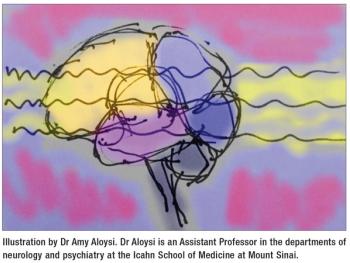
Some recent breakthroughs, using newly developed neuroscience investigational tools, suggest that if research resources are available, we could soon make substantial advances in understanding the mechanism of action of ECT.

Many classics, such as those written by Dickens, can be viewed as a metaphor for psychotherapy. Beyond symptom improvement, psychotherapy addresses the meaning of one's life and how it relates to meaningful values of loved ones as well as the surrounding community.

A commentary on civility and ethical standards in the aftermath of terrorist events in France.

Everyone who has ever billed a third party for psychiatric care knows that lack of “medical necessity” is the catch phrase used throughout the insurance industry to deny care that the clinician who has actually evaluated the patient has determined is needed.
Contemporary ideas about psychotic conditions and clinical approaches for treatment.
Take the ethics quiz about a cognitively intact, highly intelligent patient with good ego strength and coping skills who plans to commit suicide.
I’m driving home from the ER, not ready for sleep, eaten up by memories of my mistakes...
This is usually one of the first questions asked by patients and their families following a psychotic episode, suicide attempt, or manifestation of any serious mental illness. More from the Director of NIMH.
E&M codes are more complicated to learn, but psychiatrists can now deservedly get paid more for treating their more complicated patients or for engaging in time-consuming activities. Here: a focus on codes 99212 to 99215.
Is your older patient using or abusing drugs or alcohol? This video reviews how general psychiatrists can provide effective intervention when a substance abuse problem is identified.
A commentary on France's response to recent acts of terrorism that unified a nation and the world, co-written by a psychiatrist who was at the Paris Rally.
The greatest tribute to those who perished in France may be to find better ways to put out the fires of terrorism. Mental health professionals are trained to use words to diffuse conflict. The pen is mightier than the sword, but it can also tempt the reckless to load their weapons.
A psychiatrist explains the pharmacogenetic factors that suggest a positive-or negative-response to naltrexone. He also offers some practical guidance about using this agent in clinical practice.
A brief video on the pros and cons of legalizing the recreational use of marijuana.
Can we predict risk for depression? There are no genetic tests or imaging tests that can be used to predict individual risk. But a longitudinal study at Stanford University is worth watching.
The articles in this Special Report address suicidal behavior in the context of the role of sexual identity, the effects of antidepressants and lithium on suicidal behavior, and clinicians’ reactions in the aftermath of suicide.
An interesting pharmacological approach in terms of anti-suicidal strategies is the use of lithium for treatment of patients with affective disorders. Details here.
As an occupational hazard, preparing for the possibility of patient suicide will help the clinician anticipate the types of support that our colleagues or we may need to weather the event.
Ten years ago, the FDA placed a black box warning on all antidepressants because of concerns that the medications increase risk of suicidal thoughts and behavior in youths. It's time for the FDA reevaluate that decision.
This article reviews what is known and unknown about LGBT suicide risk, discusses risk and protective factors for LGBT adolescents and adults, and provides recommendations for assessing and treating LGBT patients.
The Psychiatric Views on the News series for Psychiatric Times attempted to bring together societal events and psychiatry to start a conversation. Is a psychiatric view on the news important? If so, what other stories have caught your attention, and why?
"Drugging our Kids" is deserving of all of our attention, says this psychiatrist.
This article focuses on auditory hallucinations, which occur in a range of psychiatric and medical disorders as well as in individuals without mental illness.
The authors review the evidence for the use of ECT and other novel neurostimulation techniques in the treatment of schizophrenia.
When widespread fear and anxiety about the spread of an infectious disease stress our society, psychiatrists can play a variety of important roles in population health management.
Given that rates of military suicide have risen to unprecedented levels, the burden of empirical proof in support of weak military mental health confidentiality standards is squarely on the military.
Here: a look at Mobilyze and CrossCheck--2 apps currently in development that are embedded within smartphones and designed to capture objective data on patients to provide timely treatment and relapse prevention.
Because of the widespread use of selfies by young people in social media and digital communication, it is important to examine the psychology behind the selfie as well as ways mental health professionals can talk to adolescents and their parents about these issues.