









Anton Porsteinsson, MD, discusses some specifics for fine-tuning the care of patients with Alzheimer disease. Here: optimizing physical health and mental stimulation and promoting a brain-healthy diet and aerobic exercise.
Anton Porsteinsson, MD, discusses some specifics for fine-tuning the care of patients with Alzheimer disease. Here: optimizing physical health and mental stimulation and promoting a brain-healthy diet and aerobic exercise.

Can stimulants increase function in people with early stage Alzheimer disease? Here, Anton Porsteinsson, MD, discusses the pros and cons.

In this video, Anton Porsteinsson, MD, discusses some of the causative factors of Alzheimer disease: genetics, environment, personality. He goes on to explain that although there are clear determinants for AD, there are preventive actions that can be taken to delay the onset of disability.

The Alzheimer’s Association announced in July that the FDA had accepted its recommendations to modify exclusion and monitoring criteria for clinical trials of agents that affect β-amyloid protein in the brain.
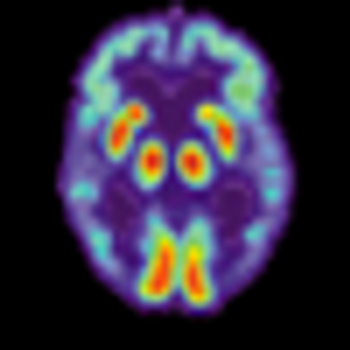
If telling patients they have “pre-clinical Alzheimer’s” or “MCI due to Alzheimer’s Disease”-absent effective treatment-produces more emotional suffering than it relieves, a difficult ethical question arises; namely, can such a disclosure be justified under the foundational principle of non-malfeasance?

The team approach to dementia psychiatry services requires leadership for direction, decision making, and policy changes in order to make the process efficient and beneficial for all involved.

Do patients with the personality trait alexithymia have trouble understanding the written language? What percentage of patients with dementia have at least one psychiatric comorbidity? These and more in this quiz.

As I lie in my hospital bed, attempting to breathe through my trach tube at a normal rate, waiting for my morning medication, and hoping to hear good, or at least manageable, results from my doctors when they come to me on rounds, my mind wanders. Despite the precariousness of my situation, I can’t help but smile as I think of my now monthly psychotherapy sessions.
Focus on Obesity, Insulin Resistance, and the Metabolic Syndrome
The furor surrounding the recently proposed Alzheimer's Guidelines was provoked by their premature attempt to introduce early diagnosis, well before accurate tools are available. The same laudable, but currently clearly unrealistic ambition has propelled two of the worst suggestions for new diagnoses in DSM-5: Psychosis Risk and Mild Neurocognitive.
In July, panels sponsored jointly by the National Institute of Aging and the Alzheimer's Association presented controversial proposed guidelines for diagnosing Alzheimer's at three different stages of its progression.
Previously, I have been quite critical of the DSM-5 suggestion to introduce a new diagnosis-- Minor Neurocognitive Disorder--on the grounds that it would create a large false positive problem and would lead to unnecessary worry and cost with no useful intervention.

Researchers who have spent their careers studying schizophrenia and mood disorders might be forgiven a bit of “biomarker envy.” At long last, it seems that the neurologists and neuropsychiatrists have developed some fairly sensitive and specific “lab tests” for Alzheimer’s Disease (AD).

Since the early twentieth century, when Alois Alzheimer and Emil Kraepelin constructed it as a unified clinical-pathological entity, Alzheimer’s disease has been both one of the most stable and one of the most problematic neuropsychiatric entities.
Keys to diagnosis, assessment, and management.

The causes of Alzheimer disease and attempts to predict who is at risk for it have been confounding the medical profession ever since Dr Alzheimer first described the disorder in 1906. Finally, a breakthrough in dye and imaging technology may be the key to solving the puzzle.
Resources, books, and practice guidelines
This article reviews the differences between dementia types and future directions.
The United States Census Bureau projects that by 2010 nearly 13% of the US population will be over the age of 65. The elderly are one of the most rapidly growing segments of the US population and are expected to account for more than 20% of the total population by 2050.1 In 2001, the prevalence of dementia in North America was 6.4%. A 49% increase in the number of people with dementia is expected by 2020, and a 172% increase by 2040.2 Patients with dementia may lack the capacity to consent to treatment. The need to evaluate capacity to consent to treatment will therefore increase as the aging population grows.
Of the screening tools available to help identify early symptoms of Alzheimer’s disease, which is best?
Mortality in elderly patients with dementia markedly and progressively increases with extended use of antipsychotics, according to the first long-term controlled study of risk in this population. Earlier evidence of this risk was from short-term trials not exceeding 14 weeks.
The assessment and treatment of psychiatric symptoms in persons with cognitive dysfunction are becoming increasingly important. Prevalence estimates of dementia in the United States range from 5% in those aged 71 to 79 years to 25% to 50% in those 90 or older.
Mortality in elderly patients with dementia markedly and progressively increases with extended use of antipsychotics, according to the first long-term controlled study of risk in this population. Earlier evidence of this risk was from short-term trials not exceeding 14 weeks.
It is an ancient practice to state instructions for distributing one’s property after death. In Genesis 48, Jacob verbally bequeaths his property to Joseph, Joseph’s siblings, and Joseph’s 2 sons. Wills existed in ancient Greece and Rome, with restrictions.
A discovery about the brain protein KIBRA, commonly found in the kidneys and brain, could lead to future treatments for Alzheimer disease (AD). Investigators at the Translational Genomics Research Institute (TGen), lead by Corneveaux and Liang, in Phoenix found that the risk for AD is 25% lower in persons who carry the memory-enhancing KIBRA gene.1 This fi nding indicates that there might be a link between KIBRA and some of the proteins with which it interacts.