





Gender Issues
Latest News

Advertisement
Latest Videos


Advertisement
More News

In this CME article, learn more about the full continuum of presentations and variable trajectories typical of females with ADHD.

It is essential that clinicians take an active approach in creating a culturally safe space to provide mental health care to WoC.

Nearly 1 in 2 women compare themselves to Barbie.

The politicization of gender-affirming care creates a harmful and dangerous reality for transgender youth.

Study results presented at the 2023 American Psychiatric Association Annual Meeting.

A mayday call to support maternal mental health.

More girls are belatedly receiving an autism diagnosis.

This Sigourney Award winner was recognized for his international work in gender and sexuality.

Psychiatrists are in a unique position to empower their patients by recognizing and addressing key issues surrounding gender and sexuality.

Why are more and more adult women being diagnosed with ADHD? A presentation at the APNA Annual Conference shed light on the issue.

Gender-affirming care: medically necessary for mental health.

Treating women of reproductive age who have depression can be difficult. Here’s an overview on the subject from the 2022 Annual Psychiatric Times™ World CME Conference.

The endocrine system is an important puzzle piece when addressing psychiatric disorders.

What is the model minority myth and how is it harming us all?

“Changing the status quo requires all of us to take an active stand.”

What are the differences in epidemiological and clinical characteristics of bipolar disorder between the sexes?

“In the general population, insomnia is associated with greater cognitive impairment, but its association (and potential sexual dimorphic effect) in schizophrenia is less clear.”
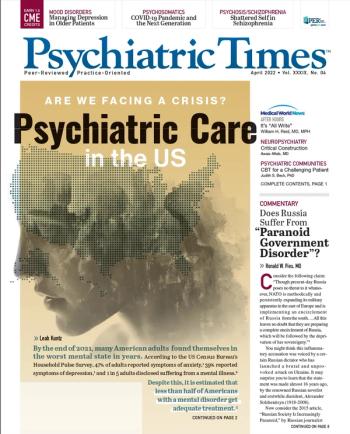
The experts weighed in on a wide variety of psychiatric issues for the April 2022 issue of Psychiatric Times.
Transgender and gender-diverse youth experience higher rates of depression, suicidal behaviors, and self-injury than their cisgender peers. Here's what you need to know.
PTSD is more prevalent in women than in men. What are the biological, psychosocial, and cultural factors that may explain why?

Sex and gender, influenced by genetics, epigenetics, and environmental/social stressors, must be considerations in evaluating every patient.

Violence against women and resulting traumatic brain injuries increased during the COVID-19 pandemic.
Recent research suggests females with autism may need their own set of parameters on which to be measured.

Are lower vitamin D levels in women related to depressive mood?

Psychiatric Times featured a wide variety of psychiatric issues and current events throughout February.
Advertisement
Advertisement
Trending on Psychiatric Times
1
Schizo-Obsessed! Untangling the Overlap Between Obsessive Compulsive Disorder and Schizophrenia
2
Can Digital Memory Tests Detect Tau-Related Cognitive Change Before Alzheimer Disease?
3
FDA Shelves Fast-Track Drug Review Initiative
4
New National Guidance for Managing Medetomidine Intoxication and Withdrawal
5