




Mood Disorders
Latest News
Advertisement
Latest Videos





CME Content






Advertisement
More News
Research shows an increased risk for suicidal thoughts, suicide attempts, and even death by suicide following brain injury.

The weight-adjusted waist index was a stronger predictor of depressive symptoms than either body mass index or waist circumference.

Review tapering challenges and strategies for benzodiazepines in this Special Report article.

The latest in mood disorder news, all in one place.
Antidepressants are differentiated by long-term response in a 2-year cohort study of patients with MDD.

“The selectivity of NBI-1070770 for the NMDA NR2B receptor may benefit patients with moderate to severe depression.”
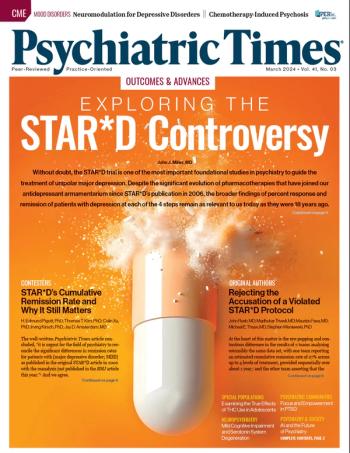
The experts weighed in on a wide variety of psychiatric issues for the March 2024 issue of Psychiatric Times.

From a promising new intervention for treatment-resistant depression to another look at the STAR*D controversy, here are highlights from the week in Psychiatric Times.

Our Mood Disorders Section Editor discusses the disorder in honor of World Bipolar Day.

What is new in research on bipolar disorder?
Here’s a look back at selections from our March content series on mood disorders.
This treatment is now the first and only TMS treatment that is FDA-cleared for this patient population.

What is the Clubhouse model of psychosocial rehabilitation, and how can it benefit both patients and clinicians alike?
“Our patients, our field, and our integrity demand a better explanation of what happened in STAR*D than what has thus been provided.”

In this CME article, review the principles and applications of both invasive and noninvasive neuromodulation techniques for the treatment of mood disorders.

Here's how embracing a comprehensive, patient-centered approach and staying informed about emerging treatments can help mental health professionals make a difference in the lives of patients with TRD.

The Psychiatric Times Special Report on Treatment-Resistant Depression includes expert discussions on how clinicians can manage major depressive disorder and treatment-resistant depression in patients who do not achieve wellness right away.

Take a look back at our recent coverage relating to our March content theme.

Write to us now to be part of our series focused on mood disorders this month.
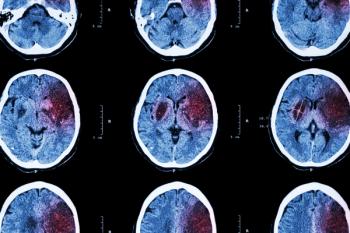
Neuropsychiatric disorders regularly occur following traumatic brain injury and are often diagnosed within the first year postinjury. Diagnosis and treatment of neuropsychiatric disorders can be difficult due to a number of interacting factors, such as preinjury psychiatric history, lesion location, injury severity, substance misuse, and psychosocial complications. Clinicians should use a highly individualized approach to diagnosis and treatment planning.
Future use of a 12-hour standardized lithium serum concentration notation: the first step towards more interpretable scientific literature and the return of the therapeutic importance of lithium.

These partnerships aim to address the mental health needs of underserved populations, including individuals with clinical depression, anxiety, and mood disorders.

Check out this broad range of innovative medications in development with the goal of providing psychiatric clinicians with novel treatments in the quest to decrease patient suffering and improve function and quality of life.

Psychiatric Times chats with new Mood Disorders Section Editor Gus Alva, MD, about his new role, his interest in mood disorders, and his love of psychiatry.
Advertisement
Advertisement
Trending on Psychiatric Times
1
DT120 (Lysergide) ODT Receives Breakthrough Therapy Designation for Treatment of MDD
2
Anita Clayton, MD, on Diagnosing and Discussing Sexual Dysfunction
3
Morning Rounds: September 1-8
4
New 52-Week Topline Open-Label Data from Phase 3 COMP005 Trial: The Power of Another COMP360 Dose
5