
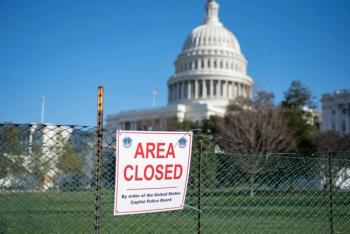
What role does denial play in the collective American psyche?

Dr Pies is Professor Emeritus of Psychiatry and Lecturer on Bioethics and Humanities, SUNY Upstate Medical University; Clinical Professor of Psychiatry, Tufts University School of Medicine; and Editor in Chief Emeritus of Psychiatric Times (2007-2010). Dr Pies is the author of several books, including several textbooks on psychopharmacology. A collection of his works can be found on Amazon.
What role does denial play in the collective American psyche?

Is there a way to find balance in discussing the chemical imbalance theory of depression?

The anatomy of unhappiness is more complex than DSM-5’s categories.

A controversial report from the British Psychological Society draws a pair of sharp rejoinders.
Dr Pies offers an analysis of psychiatry’s place on the spectrum of science using “causality” and “meaning” as lenses.

The risk of “false positive” screening in primary care settings is reduced by a thorough clinical evaluation.

There are epidemiological and clinical reasons why we should drop that term.

Avicenna may have been among the first physicians to document that anger is often a transitional state from melancholic depression to mania—implicitly recognizing the “switch” phenomenon.

Clinicians may need to consider what happens to religiously oriented people when things go badly, despite their faith and prayer.

Given that face masks help prevent asymptomatic spread of COVID-19 and may also reduce the chances of anyone contracting the virus, wouldn’t any decent, responsible citizen put up with such a minor inconvenience? Apparently not.
Although it may seem a bit of a luxury to begin an examination of countertransference at a time when life itself hangs in the balance, clinicians may be working with patients whose political views make it very difficult to address their emotional needs.

How can psychiatry constructively address our nation’s crisis?

Reflections on the anti-restriction protesters and hyper-individualists.

Beyond unsettling our minds, the current pandemic unsettles our souls in ways we are just beginning to understand. Just as the COVID-19 virus attacks the respiratory tract, the pandemic itself can assault the soul. Dr Pies identifies five manifestations of the crisis.

Ronald Pies, MD, offers advice on talking to patients about spirituality during the COVID-19 pandemic.

As we face a medical and existential crisis, how do we find strength and cope with stress and trauma? A podcast with Ronald W. Pies, MD.

Slipping out of quarantine, we walk hand in hand. Comforting words that this, too, shall pass.

How can a human being commit such acts without being under the influence of some powerful “alien” force? How can they not be "mentally ill"? Here's how.

When it comes to mass shooters, persistent emotional disturbance is not the same as frank “mental illness.” Exploring the spectrum of psychopathology.

A reformulated biopsychosocial paradigm can be clinically useful. How? Keep reading.

Immoronic: a combination of immorality and moronic. Examples are not hard to find in modern American culture, and they transcend any one political party or ideology.

In short, Epstein’s story was media catnip. Unfortunately, lost in all the sensational coverage of this one man was the systematic mistreatment of people with serious mental illness in the criminal justice system.

The current Tree of Medicine is rooted in its Hippocratic soil. There are moral absolutes that our profession should stand up for, in spite of legislative or popular pressure, say the authors.

Physician-assisted suicide violates the norms of Hippocratic medical ethics. Involuntary hospitalization to prevent suicide affirms those norms, according to the authors.

Is an ancient, conflict-loving personality archetype undermining our pro-social values?
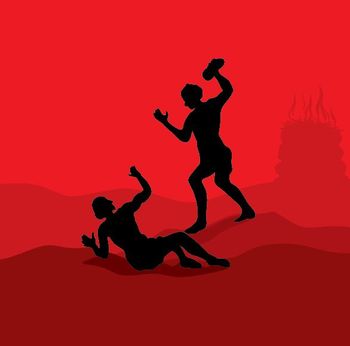
A close analysis of the psychodynamics of Cain’s crime shows us something important about his mentality-not to be confused with mental illness.

Moving toward a bio-psycho-sociocultural model of major depression.

Between the extremes of priest and provider lies the healing heart of the physician.
With a combined 70+ years of clinical experience, the authors discuss scenarios that represent two possible outcomes of discontinuing serotonergic antidepressants.

Focusing on concerning behaviors may better assist with prevention than sensationalizing individual perpetrators’ motives.