

None of them are perfect, but a few rise to the top, according to recent guidelines.
None of them are perfect, but a few rise to the top, according to recent guidelines.
How do you determine whether pain is present and its severity as well as how it responds to treatment in patients who are cognitively impaired? Some answers to these questions.

Beyond unsettling our minds, the current pandemic unsettles our souls in ways we are just beginning to understand. Just as the COVID-19 virus attacks the respiratory tract, the pandemic itself can assault the soul. Dr Pies identifies five manifestations of the crisis.

Some health care workers have been particulary vulnerable to the stress of uncertainty and loss of control engendered by the COVID-19 pandemic, illustrated by 3 cases presented here.
If we want the public to wear masks for protection from the coronavirus, not complying with self-protective measures does not model safety.
New (and not-so-new) insights on antipsychotics across a range of different measures of treatment response.
Treatment for "the scourge of psychiatry" involved malariotherapy-infecting the patient with malaria; the resulting high fevers were believed to kill off the syphilis organisms.

As we see masked faces walking alone across crowded streets, this young teen wonders if people will ever feel safe again. "Mother’s Day allows us to thank the mothers who help their children feel protected," she says.

Many physicians thought we could not overestimate the value of having a patient’s full, in-person attention, nonverbal cues and all. In the current crisis, all of that seems quaint.

Many serious challenges will face us once the curve has been flattened, and we work as a nation toward recovery in the war against COVID-19.
The premature mortality of individuals with depression is an alarming public health concern. Physical exercise may help address this concern, but it represents an underutilized intervention.
The current COVID-19 crisis is a wake-up call to how dangerously our health care workforce has been chronically over-stretched. Effective solutions are discussed.

The Chairman and Founder of Psychiatric Times' parent company introduces the May issue.

Shifting the internal narrative can enhance resilience.

Guidance for mental health care practitioners to better explain the complexities of the current crisis to their patients.
Schizophrenia and bipolar disorder are among the most serious psychiatric disorders and play a disproportionate role among individuals who end up homeless, incarcerated, and who die by suicide. Why the lack of research?

I’m feeling the heat. Not the high temperature associated with an infection but the hot flush that is a psychosomatic symptom of anxiety.
In this interview with Awais Aftab, MD, Dr Peter Zachar discusses how psychiatric disorders can be viewed through the lens of scientifically inspired pragmatism.
This has been an extremely challenging quarantine season for me, not so much because of the restrictions posed by the mandate to stay home, as I am still going to the hospital daily for patient rounds; my biggest struggle has been watching the toxic effects of the COVID-19 pandemic on many in my immediate social circle.

An announcement from the Association of American Medical Colleges (AAMC) regarding medical student clinical rotations during the COVID-19 pandemic effectively halted medical student education on March 17th.
For all educators, this is a time of great uncertainty, yet we must continue to engage and encourage students interested in pursuing careers in psychiatry, as well as facilitate comparable virtual clinical experiences for students
The associations between sleep/rhythms and psychiatric disorders are not well understood. With additional research we can better address key issues and improve patient outcomes.
The steadily rising rate of suicide in the US is a vexing public health crisis. Among the many risk factors for suicidal thoughts and behaviors is sleep disturbance.
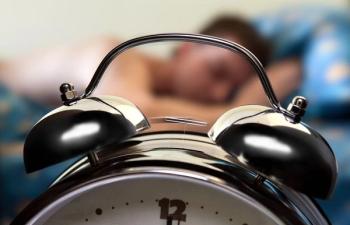
Circadian rhythms have a profound effect on our mental and physical health. Indeed, mental health and circadian health are tightly entwined, and circadian interventions can improve mood and well-being, even in healthy people.

The cure should not be worse than the disease; so must we be cautious about our response to COVID-19. More in this video with Harold J. Bursztajn, MD.

Why poetry? As the great Israeli poet Yehuda Amichai said, “When words fail, that’s when poetry begins.”

Nurses are on the front line in the care of COVID-19 patients, and for many years Dr Berlin has admired and resonated with the poetry of nurse practitioner Cortney Davis. Here: a recitation of two of her poems.

The doctors, nurses, aids, food staff, and janitors are among the frontline heroes of the COVID-19 pandemic. They know its ravages best and are most at risk. We mustn't let them down.

What is the nature of the virus turning the world upside down? Dr Sheldon Preskorn shares critical clinical information to better understand the virus, testing, and what might the future hold as we look to turn the corner in this pandemic.

Local, state, and federal officials are rushing to implement massively life-altering measures in the current pandemic even as we enter a situation that is still poorly understood.