
How can the glutamate model overcome challenges in treating major depressive disorder?
How can the glutamate model overcome challenges in treating major depressive disorder?

What novel treatments can be game changers for major depressive disorder?
Presenters at the Southern Florida Psychiatry Conference shared how prescription digital therapeutics can greatly improve patient outcomes.

"Give us this day our dividends in cash and fixed stock options as we outperform all coders against us..."

Welcome to Day 1 of So Flo Psychiatry!

Reviewing TDM’s evidence-based rationale, its clinical utility, and connection to outcomes.

Let's make time for kindness...

Seena Fazel, MD, reviews the growth and challenges of suicide risk-prediction models, emphasizing the need for rigorous validation and clinical integration.

"I read your poetry like a hiker on a treacherous trail who finally stops to rest and drink and admire the view of snow-capped peaks..."
Introduction setting the stage for why TDM of clozapine is a critical issue in modern psychiatry.

Should psychiatrists' ethical priority to try to improve mental health take priority over a strict interpretation of the Goldwater Rule during turbulent times?

Discover effective strategies for identifying and treating high-functioning addiction in patients while maintaining their daily responsibilities.

Explore how music transforms trauma into healing as Brooke Richie shares her journey and innovative initiatives in this insightful episode.

Learn more about facets of pediatric ADHD with Stacy Doumas, MD, MBA

"...we are saying thank you faster and faster, with nobody listening we are saying thank you..."

Roger S. McIntyre, MD, FRCPC, shares how FDA approval of Caplyta will benefit patients with major depressive disorder

Justin Kei, MD, discusses relation of sex differences, lifestyle, and hormones with ADHD

H. Steven Moffic, MD, explores the intersection of society and psychiatry, reflecting on cultural celebrations and the need for optimism amidst global challenges.

Learn how screening for suicidality is essential, and how to open conversations with patients on this sensitive topic.

Discover the latest insights on ADHD diagnosis and treatment, including new DSM-5 criteria and effective therapeutic strategies for diverse patient needs.

"I listened as he taught me to relax the hand just enough."

H. Steven Moffic, MD, explores the connections between "Fiddler on the Roof" and current global issues, blending tradition with hope amid Halloween reflections.

The Supreme Court is hearing a pivotal case that could reinstate conversion therapy, impacting LGBTQ+ youth protections nationwide.

Maciej Wieczorek, MD, discusses CPL'36, a new PDA101 inhibitor with a novel mechanism of action for treatment of schizophrenia.

Frank Clark, MD, discusses forensic psychiatry and advocacy within the legal system, with Jessie Hill, MD

"Do you stop and ask for understanding at those moments?" "I said not yet but I intend to start today."

Our annual transition has begun...

Gerald A. Maguire, MD, explores the importance of understanding stuttering in psychiatry, emphasizing the need for research, collaborative care, and awareness.
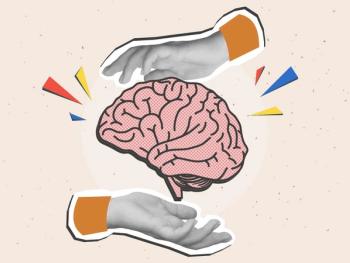
Explore the intersection of psychotherapy and pharmacology in treating mood disorders, emphasizing personalized approaches for optimal patient outcomes.

Tony Tamburello, MD, discusses advancements in correctional psychiatry, emphasizing ethical care, complex patient needs, and the role of technology in treatment.